
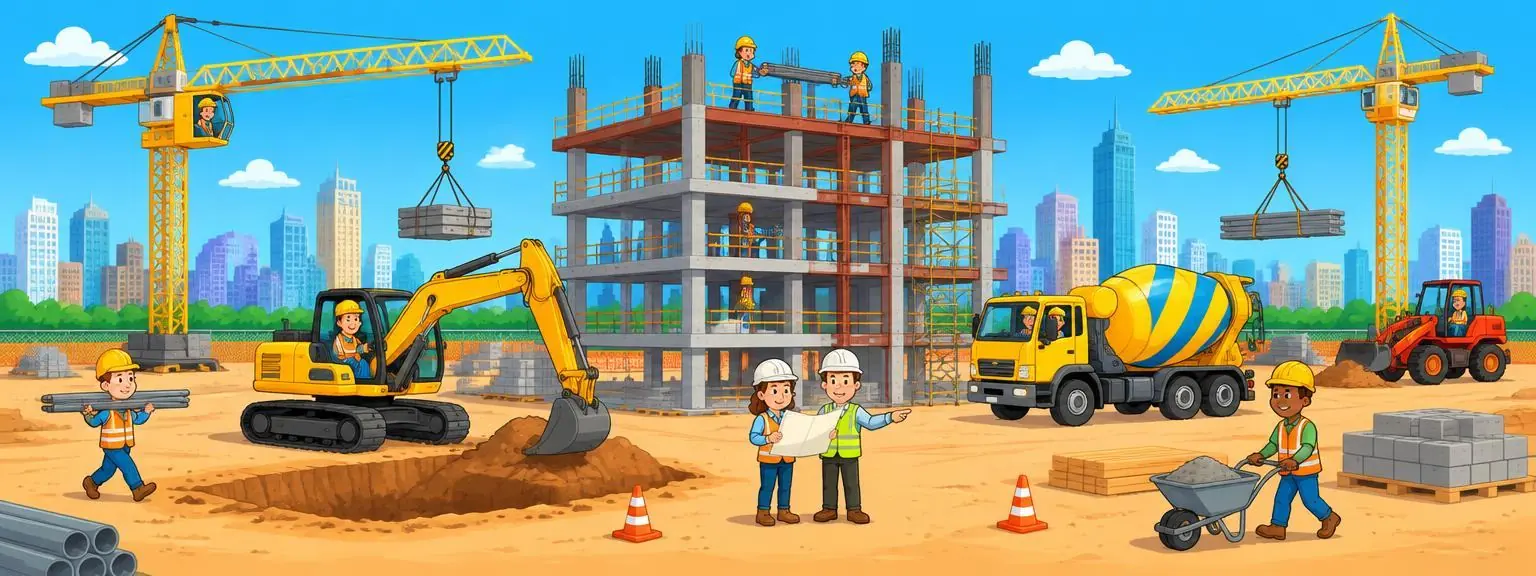
Construction Explained by Kids
Written for Kids. Surprisingly Useful for Adults.
What Is Construction?
Construction is how humans turn ideas into real life.
Every building starts as an idea, then a drawing, then a plan. Without construction, there would be no airports, no hospitals, no stadiums, and no cities.
It's the process of building things people use every day:
- Homesplaces where families live
- Schoolswhere kids learn
- Hospitalswhere people get healthy
- Roads and Bridgesconnecting places together
Construction in the Past
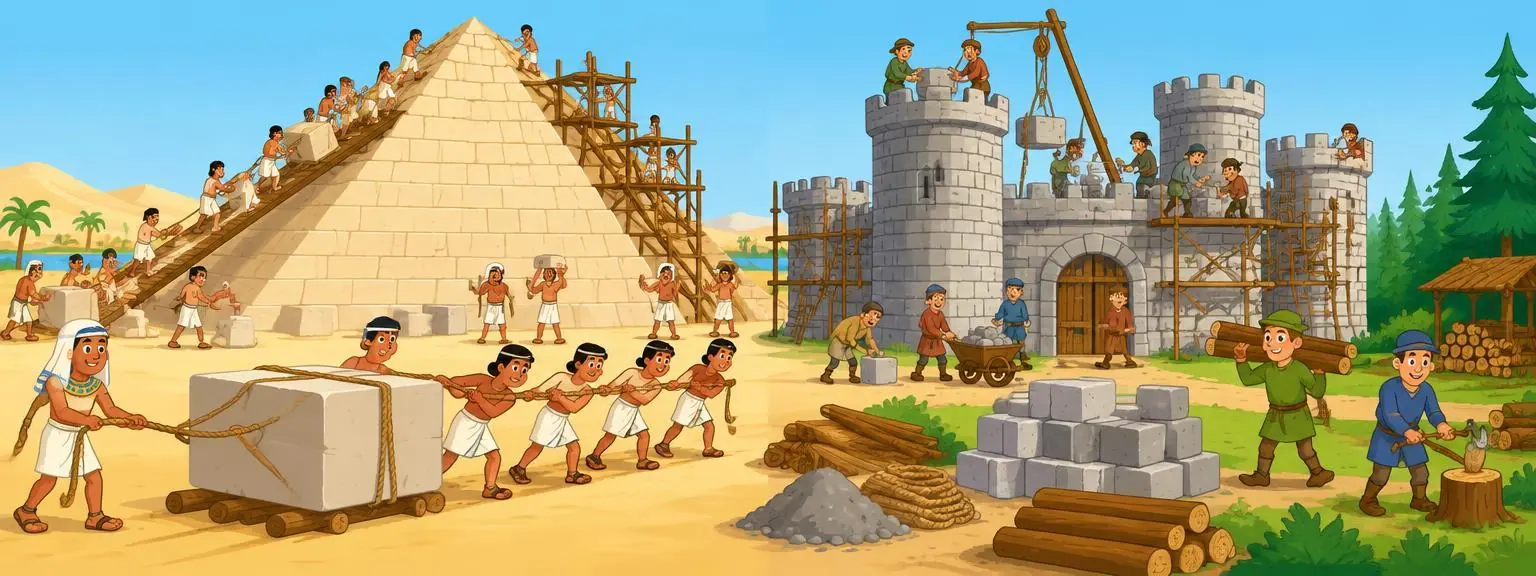
Long ago, people built shelters using materials they found nearby: wood, stone, mud, and leaves. And yet they built incredible things.
They had no electricity, no computers, no cranes. Just teamwork, smart thinking, and patience. Construction has always been about brains, not just machines.
- Pyramidstaller than modern buildings
- Castleswalls thicker than cars
- Templessurvived thousands of years
Planning Before Building
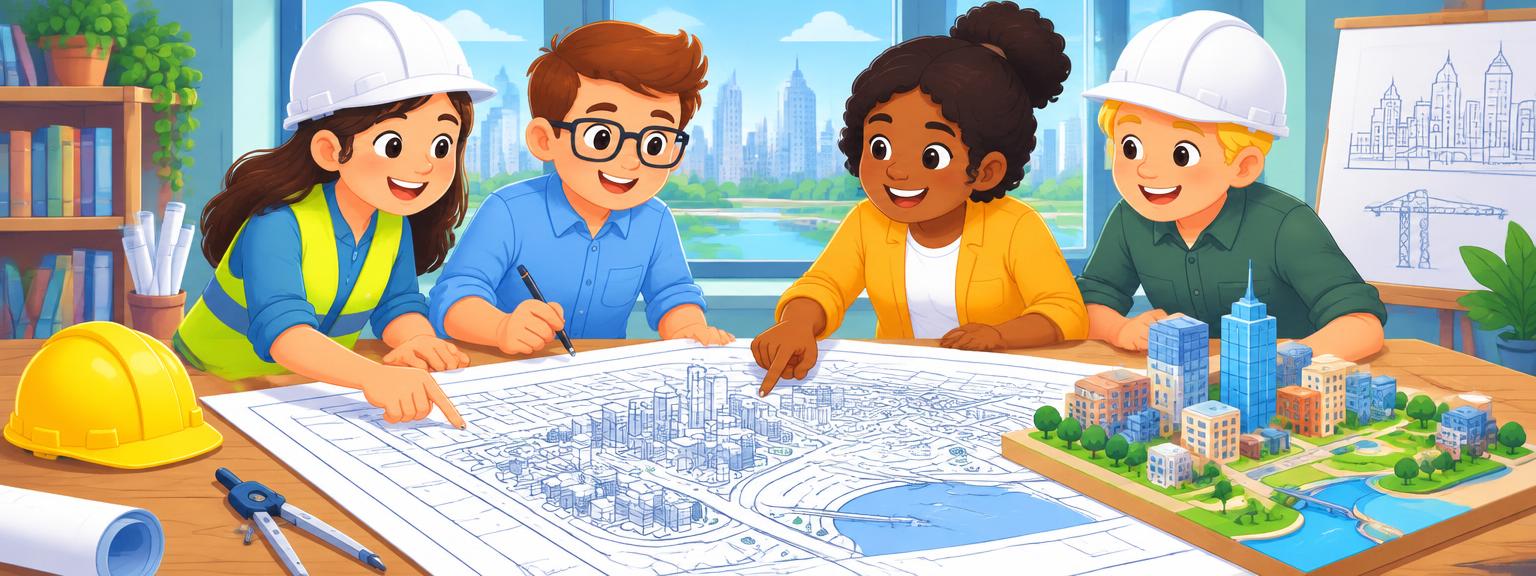
Before anything is built, months, sometimes years, of planning happens.
Architects design how buildings look. Engineers design how buildings don't fall over. If planning is wrong, buildings fail. If planning is right, cities rise.
- Define the ProblemWhat problem does the building solve?
- Plan for UsersHow many people will use it?
- Engineering AnalysisHow heavy will it be? How will wind, heat, rain, and earthquakes affect it?
- Longevity DesignHow long should it last?
How Construction Works Today
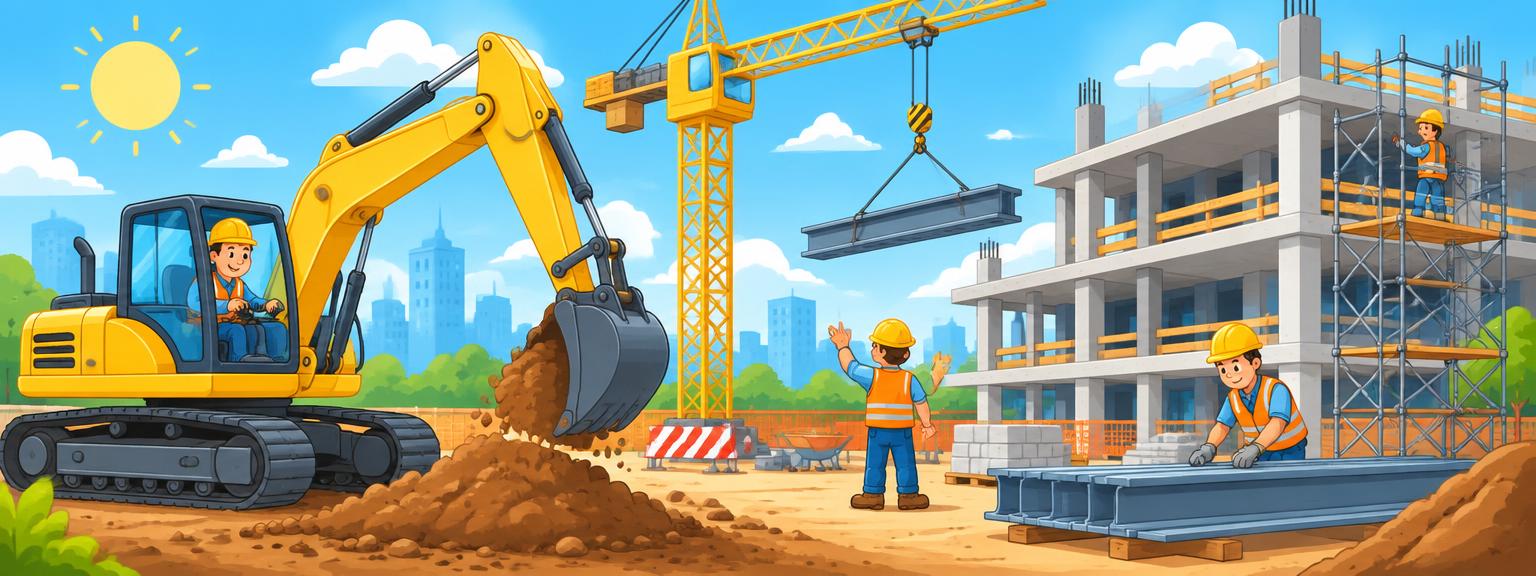
Most buildings follow these steps:
Big machines lift heavy things. Humans decide where they go and why.
- Planningdesign and prepare
- Foundationdig deep and build the base
- Structurebuild the skeleton
- Finishingwalls, floors, systems
- Testingsafety inspections
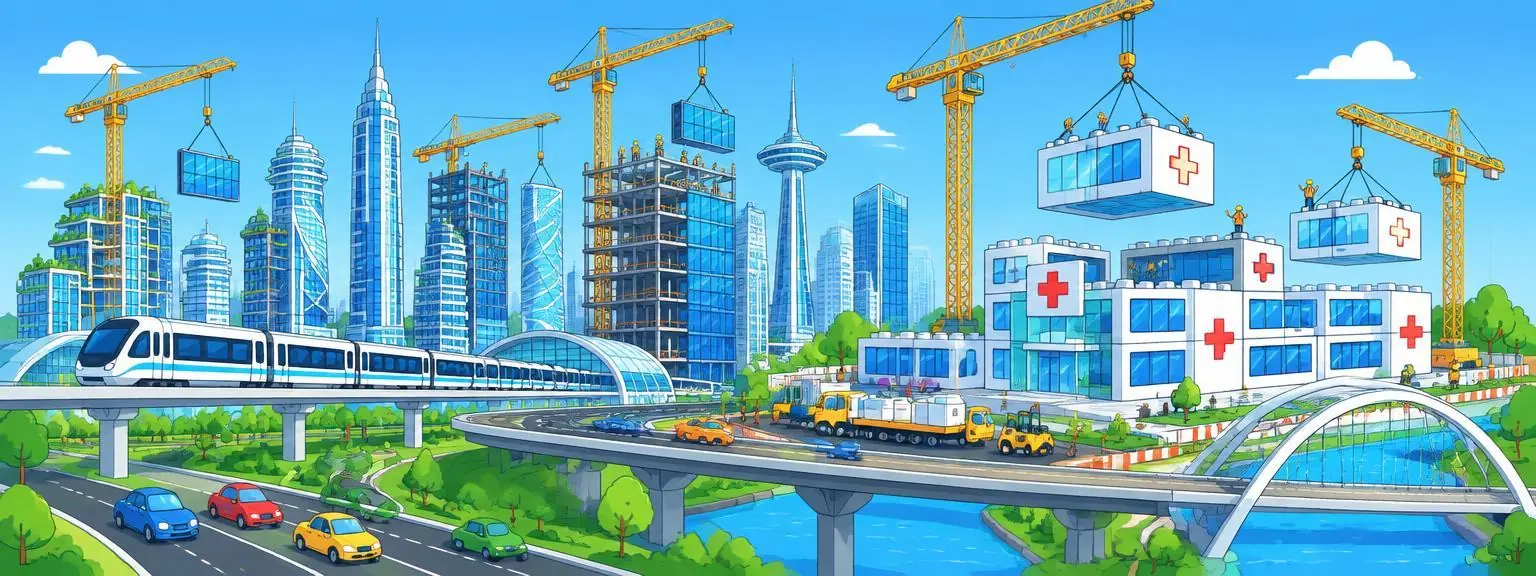
Mega Projects: Cities in 10 Years
Entire cities, with skyscrapers, roads, metro systems, hospitals, schools, and shopping malls, can rise in less than 10 years. How?
It's like building one giant LEGO city, but with real people living in it.
- Planning Firstyears of planning done in advance
- Divided Zonesland is divided into zones
- Parallel Constructionthousands of workers build at the same time
- Perfect Timingmaterials arrive exactly when needed
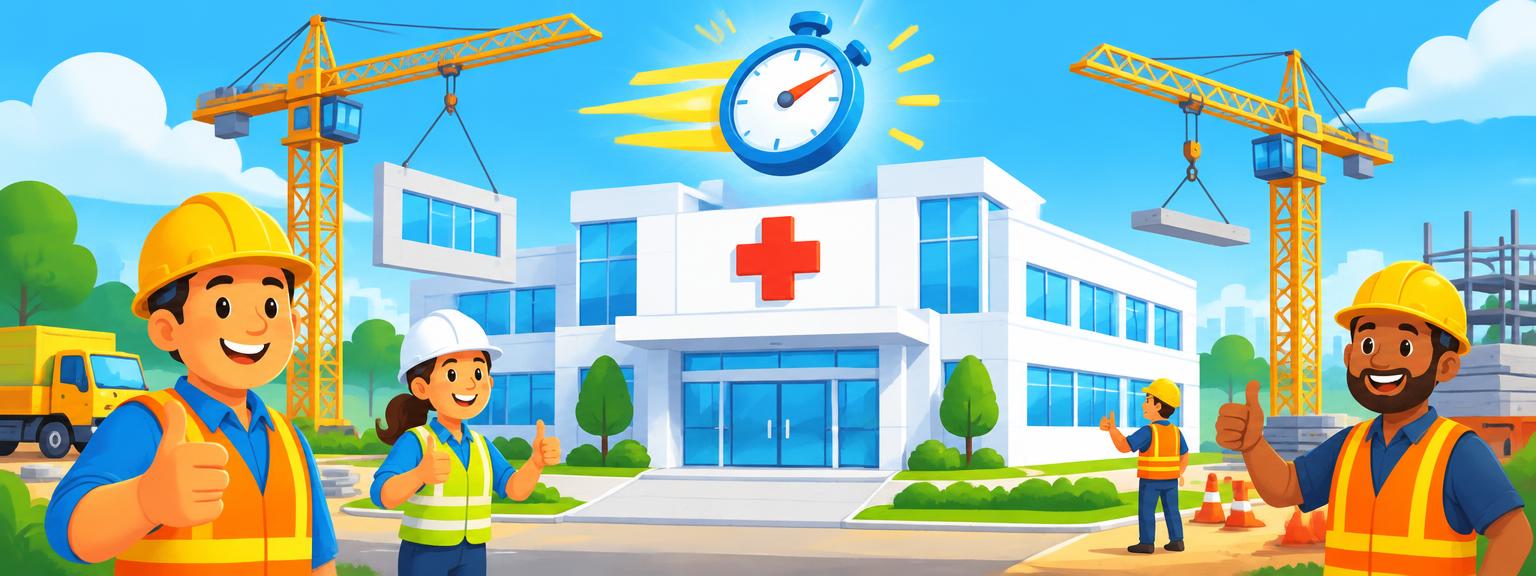
Hospitals Built in Days
In emergencies, construction speeds up to superhero levels. Fully working hospitals have been built in 10 days, 7 days, sometimes even faster.
This is called modular construction: snapping LEGO bricks together at real-world scale.
- Factory Buildingrooms made in factories with walls, wiring, and pipes
- Transportpieces arrive at the site ready to go
- Assembly 24/7cranes stack them together non-stop
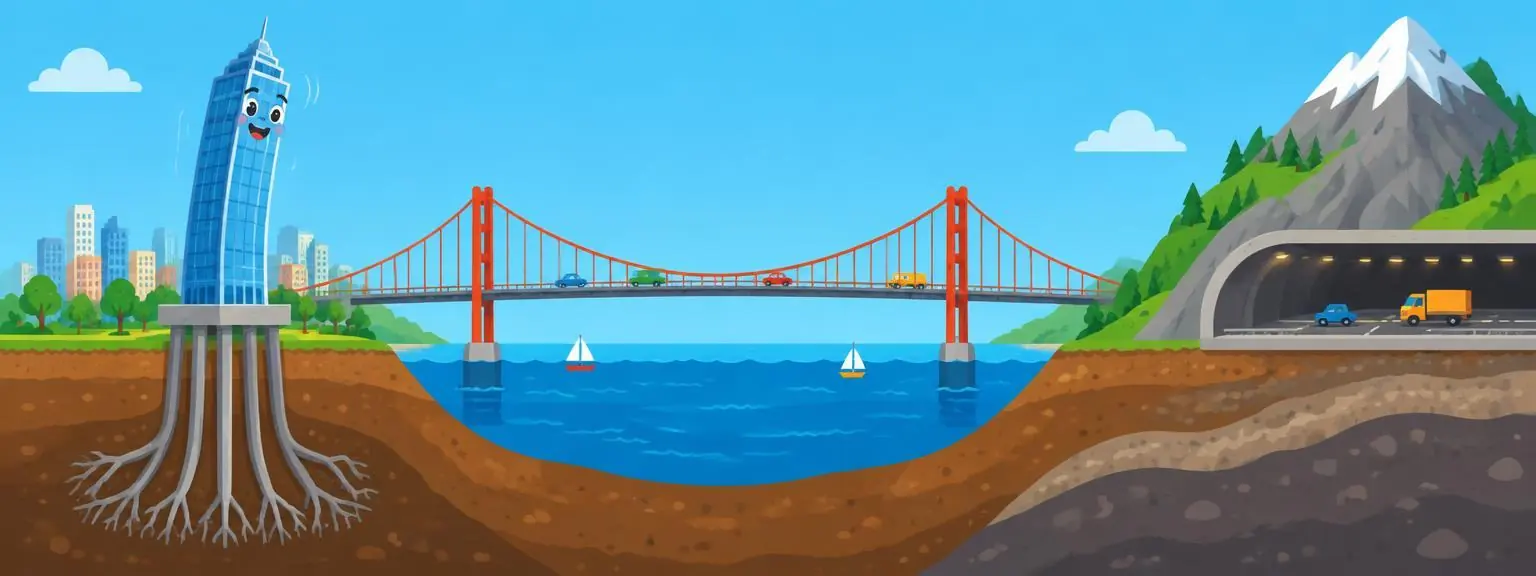
Why Skyscrapers Don't Fall Over
Some buildings are over 800 meters tall. That's taller than mountains, clouds, and hundreds of houses stacked together. So why don't they fall?
A building that moves a little is safer than one that refuses to move at all.
- Deep Foundationsgo deep into the ground
- Flexible Steelbends instead of snaps
- Wind Designthe shape pushes wind around
- Gentle Swaymoves a little on purpose
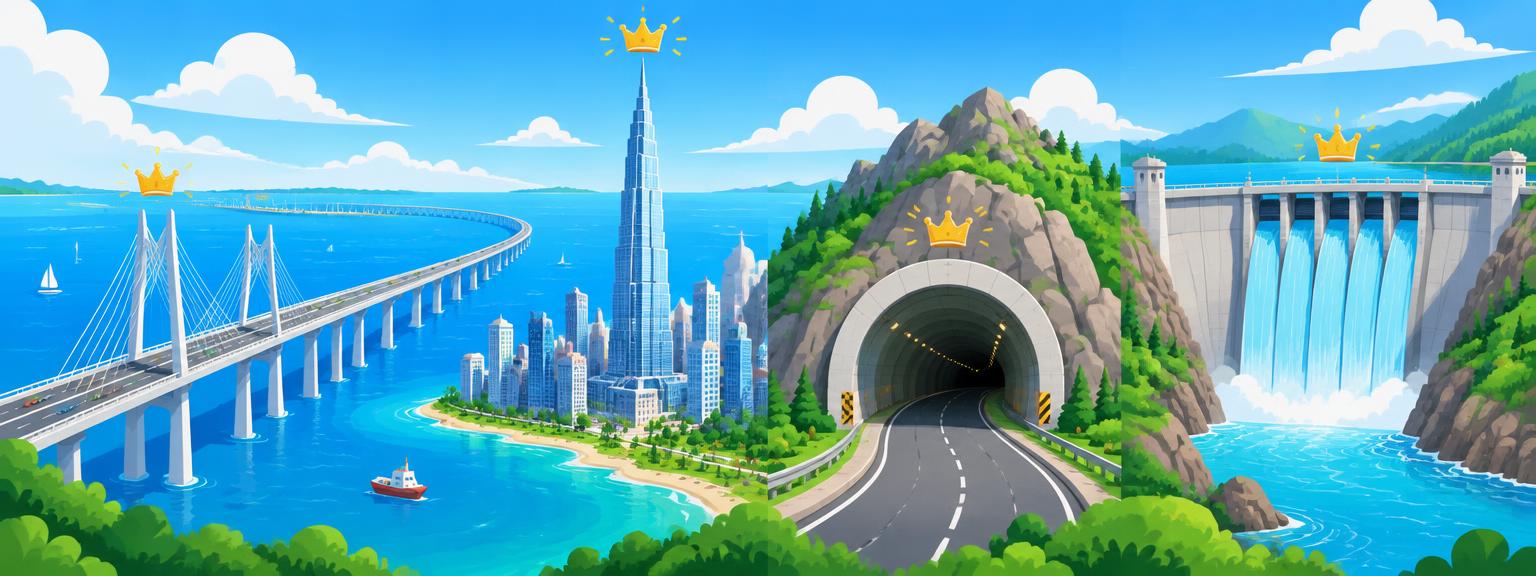
Longest Things Humans Have Built
Humans have built incredible mega structures:
- Bridgeslonger than cities, connecting islands and countries
- Roadsstretching across entire countries
- Tunnelsunder mountains and oceans, some so deep a skyscraper could fit inside
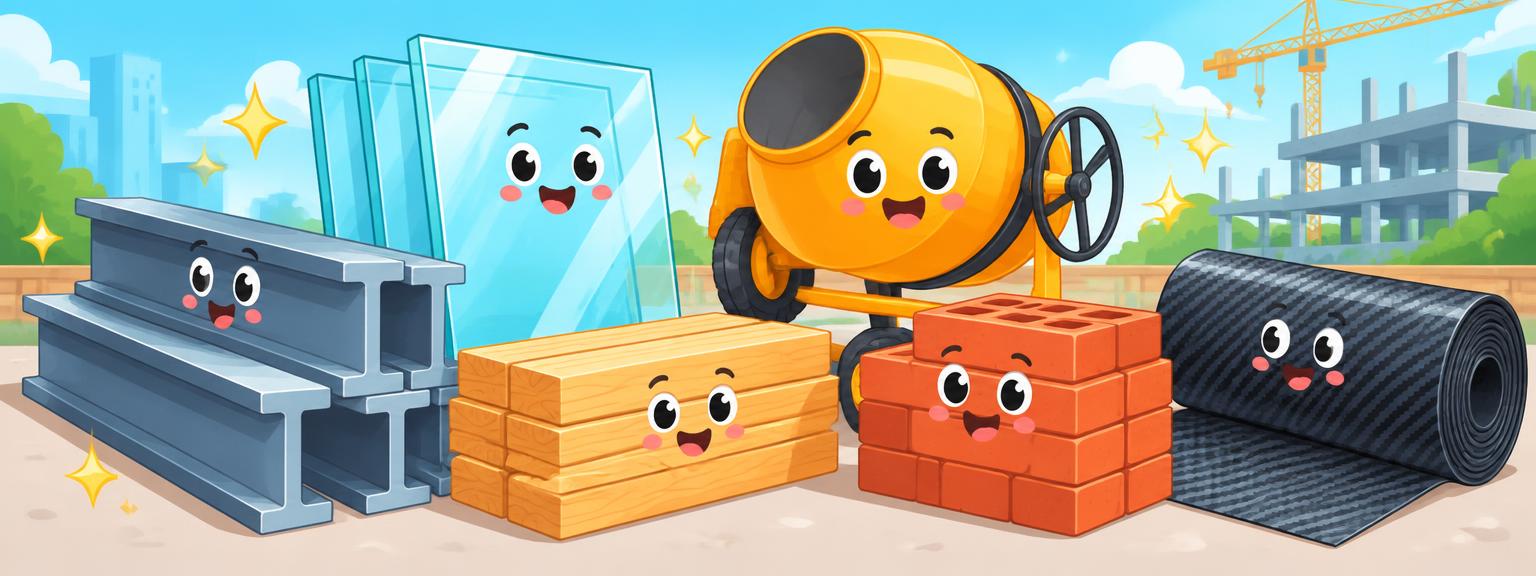
Materials That Make Mega Projects Possible
Different materials do different jobs:
Modern buildings are part engineering, part science experiment.
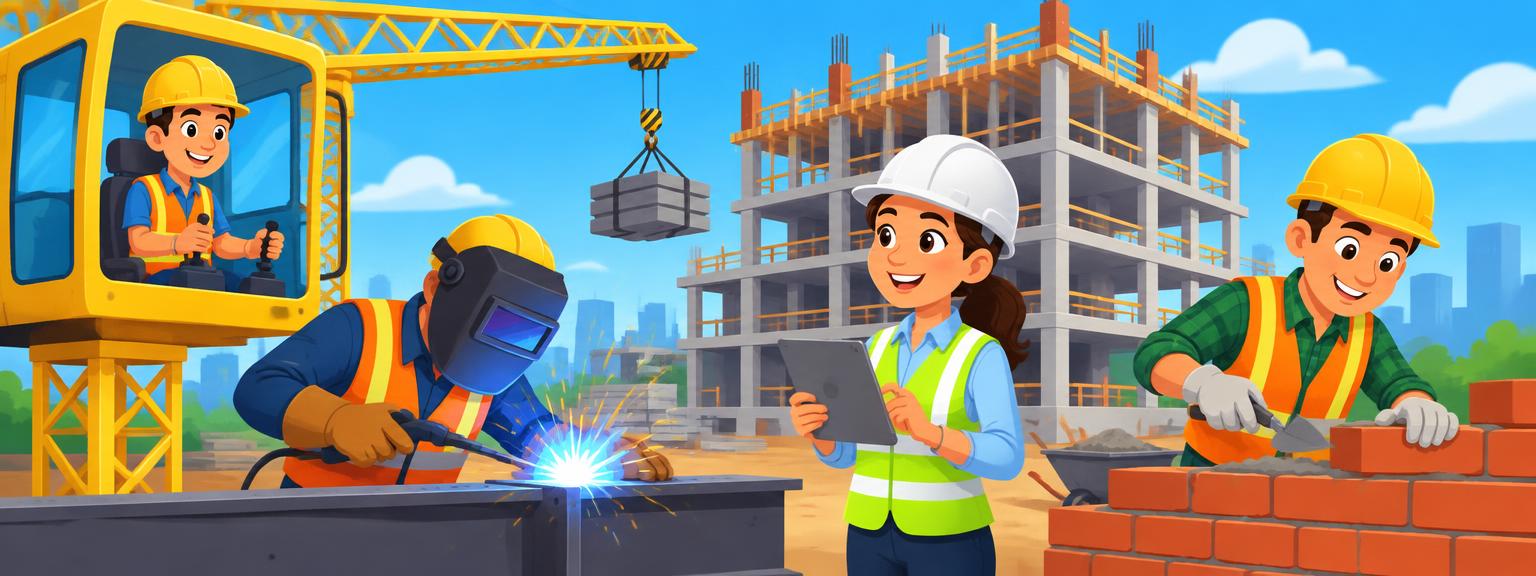
Who Builds Mega Projects?
Mega projects need armies of people:
One small mistake can stop everything. One smart decision can save years. Construction isn't about muscles, it's about coordination.
- Builders
- Engineers
- Architects
- Operators
- Electricians
- Safety Officers
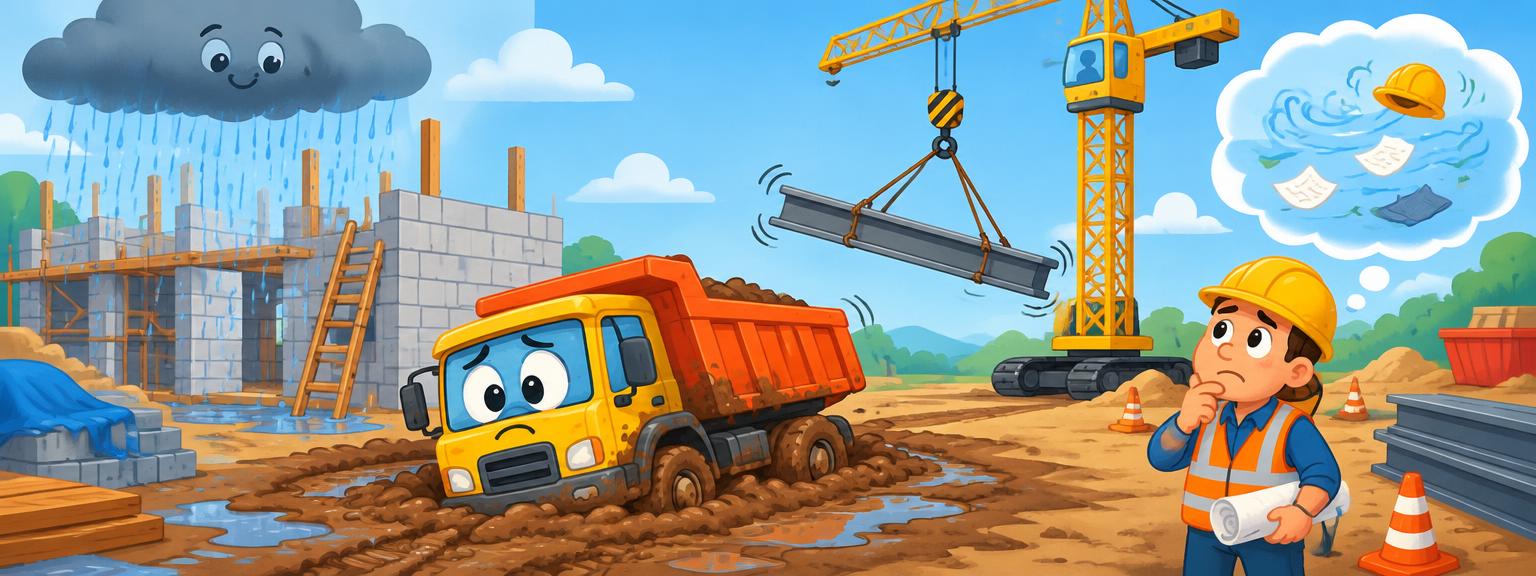
Why Construction Is Hard
Construction must fight gravity, weather, time, money, and safety risks.
Fast is impressive. Safe and strong is legendary.
- Stay Safe
- Handle Crowds
- Stay Strong
- Last Decades
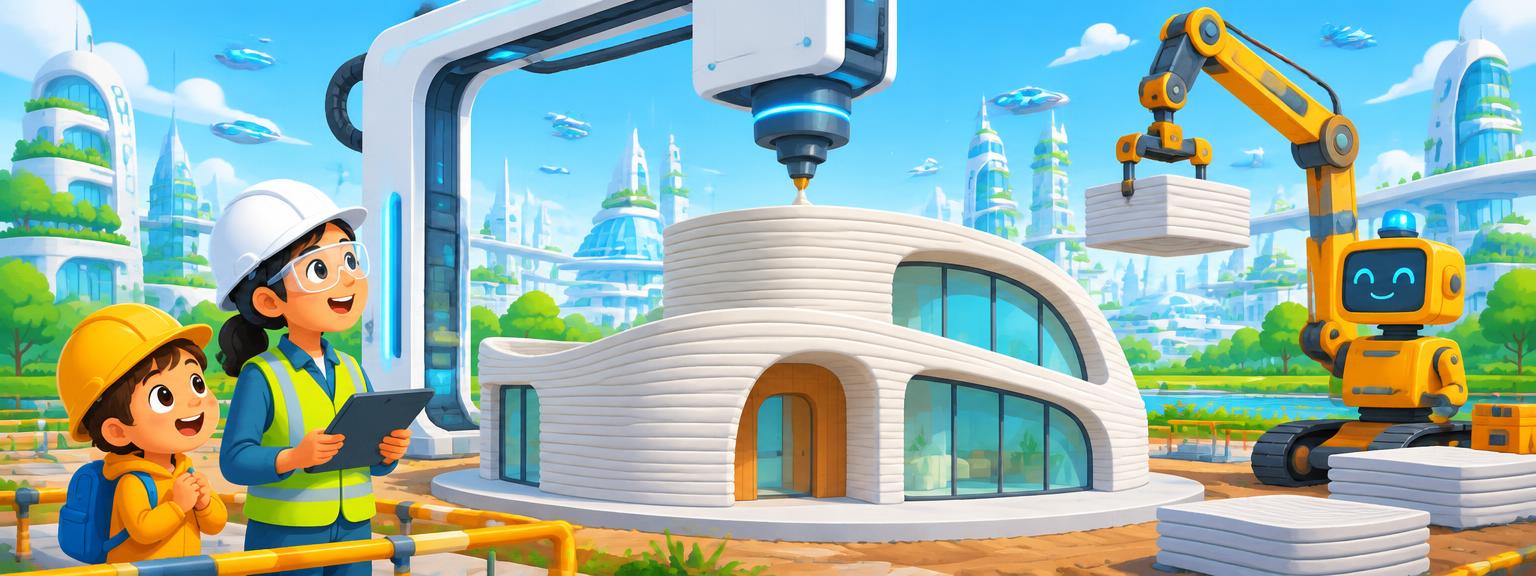
The Future of Construction
The future isn't just taller buildings, it's smarter ones.
- Use Less Energybuildings that need minimal power
- Recycle Materialsreuse instead of waste
- Natural Coolingdesign buildings that stay cool naturally
- Green Citiesnot concrete jungles
Fun Facts
Cities in 10 Years
Entire cities with metros, hospitals, and malls can rise in under a decade.
Hospitals in Days
Fully working hospitals have been built in just 7 to 10 days using modular pieces.
800 Meters Tall
The tallest skyscrapers stand higher than mountains and gently sway on purpose.
Ancient Giants
Pyramids, castles, and temples were built with no electricity, no cranes, no computers.
Quick Summary
Ideas Become Real
Construction turns drawings and plans into homes, schools, hospitals, and cities.
Planning First
Months or years of design and engineering happen before the first brick.
Teamwork Wins
Builders, engineers, architects, and safety officers coordinate like one giant team.
Build Smart
The future is buildings that use less energy, recycle materials, and stay green.
Ready for the challenge?
Construction Site Mission
You are leading a busy construction project. Build safely, carefully, and as one team.
Construction Dictionary
Blueprint
A detailed plan
Foundation
The deep base
Structure
The skeleton
Concrete
Strong building mix
Steel
Flexible metal
Crane
Lifts massive weights
Modular
Built in pieces
Engineer
Prevents collapse
Architect
Designs looks
You Are Now a Construction Expert
Construction is humans arguing with gravity, and winning. From cities built in a decade, to hospitals built in days, to towers that touch the clouds, construction proves one thing: with planning, teamwork, and imagination, humans can build the impossible. And the next mega project? It might start with a kid, a pencil, and a big idea. ✏️🏙️