
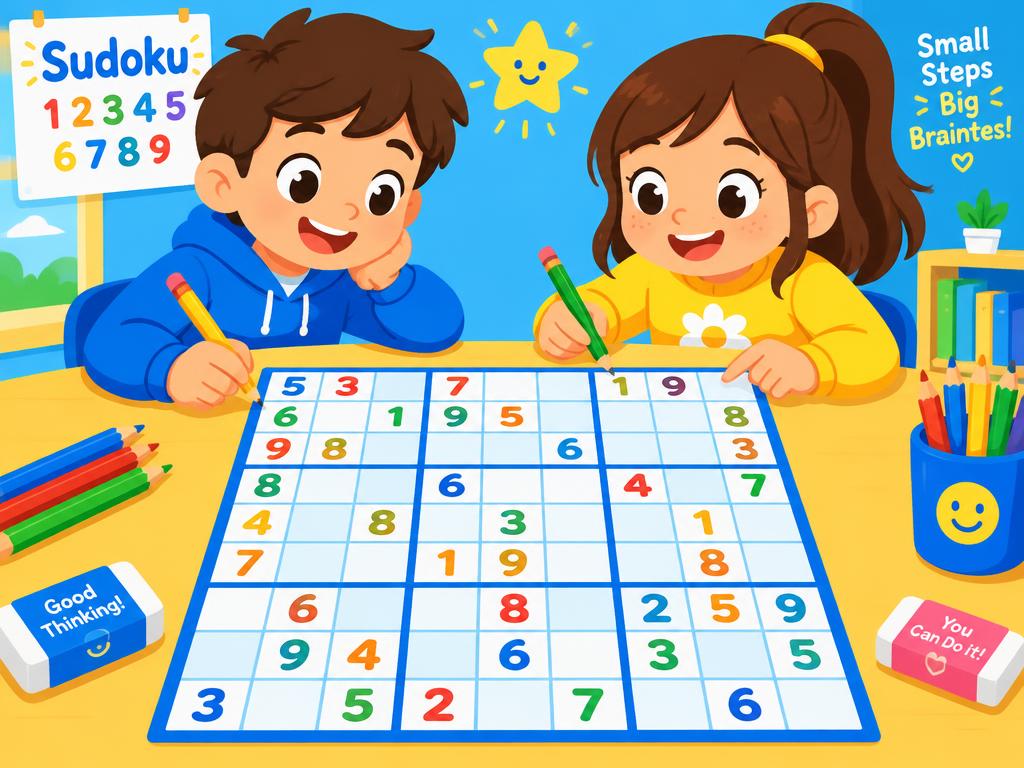
Sudoku Unlocked
Find the clues. Eliminate the impossible. Solve the grid. Written for Kids. Surprisingly useful for adults 🧠
Welcome to Sudoku
You are staring at a grid full of numbers and empty squares. There are no sums to solve and no equations to remember. Everything you need is already sitting in front of you. Your job is to examine the clues, eliminate the impossible, and discover where every number belongs.
Welcome to Sudoku: a puzzle where you think like a detective!
What Is Sudoku?
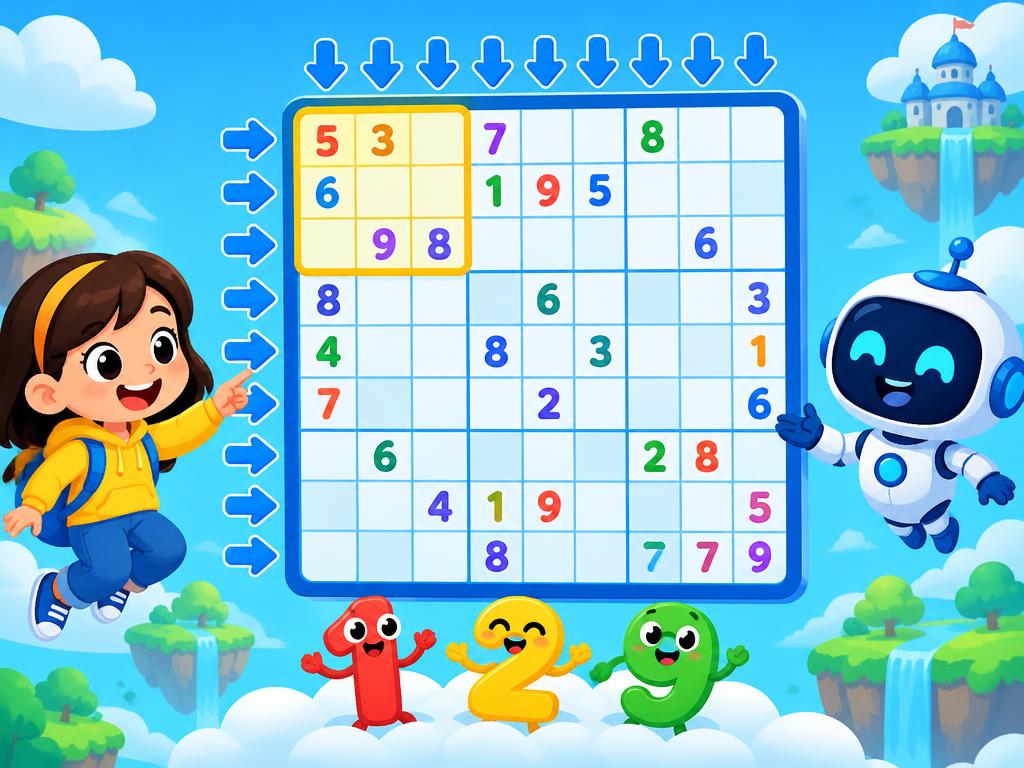
Sudoku is a number puzzle, but it is not really a maths test. You do not need to add, subtract, multiply, or divide. Instead, you use logic to work out where each number belongs. A standard puzzle has 81 squares arranged into:
- 9️⃣ Rowsnine horizontal lines across the puzzle
- 9️⃣ Columnsnine vertical lines down the puzzle
- Nine Boxesthe grid is divided into nine smaller 3 × 3 boxes
- Each row, column, and box must contain the numbers 1 to 9 exactly once
The Mission
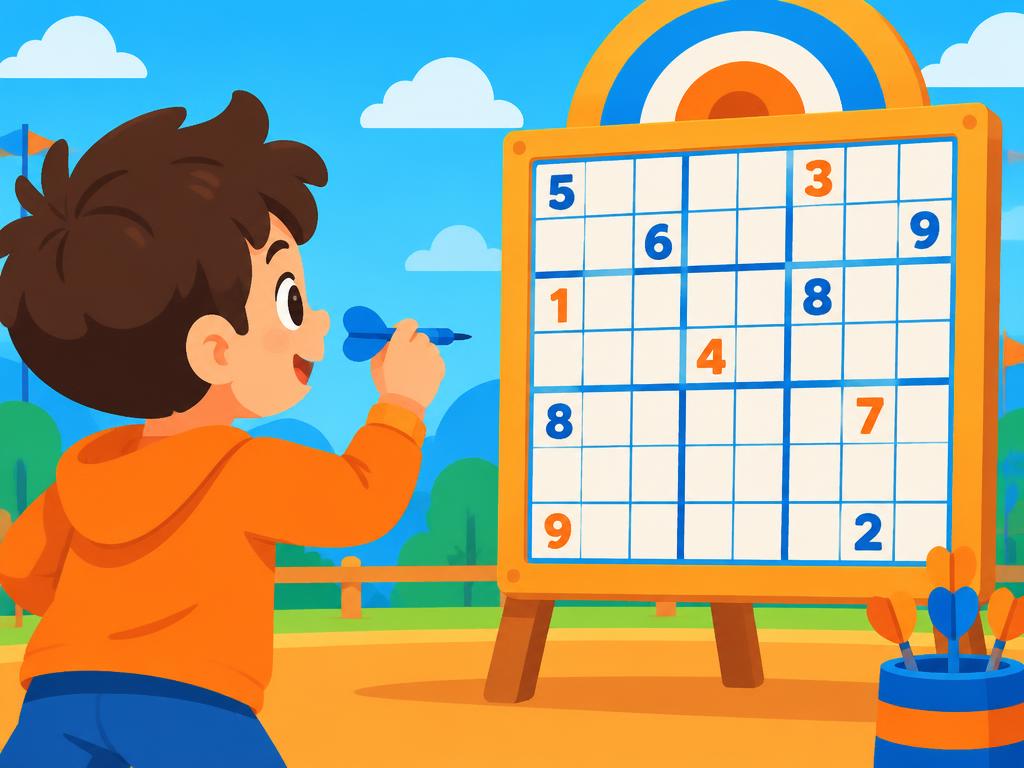
Some numbers are already filled in. These are your clues. Your job is to use those clues to complete every empty square. When you finish, every row, column, and 3 × 3 box should contain 1 to 9 exactly once.

The Three Golden Rules
Sudoku becomes much easier when you remember three rules.
Check the row. Check the column. Check the box. If a number breaks any one of these rules, it cannot go there.
- 1️⃣ Check the Rowevery row must contain the numbers 1 to 9 once. No number can appear twice in the same row
- 2️⃣ Check the Columnevery column must contain the numbers 1 to 9 once. No number can appear twice in the same column
- 3️⃣ Check the Boxevery 3 × 3 box must contain the numbers 1 to 9 once. No number can appear twice in the same box
How to Find Your First Number
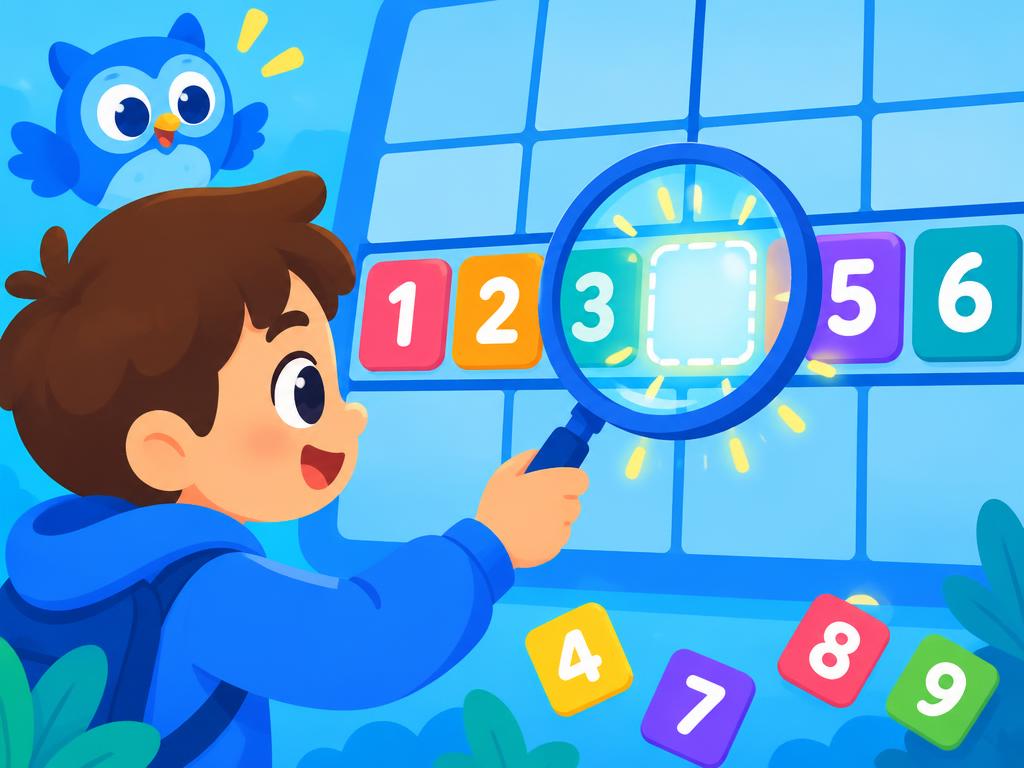
You do not need to solve the whole puzzle at once. Start by looking for the easiest clues.
- A row with one missing number1 2 3 4 5 6 _ 8 9. The answer is 7!
- An almost full columnif only one number is missing, it must be 6
- An almost full boxeight numbers and one empty square. The missing number is your next clue
The Detective Method
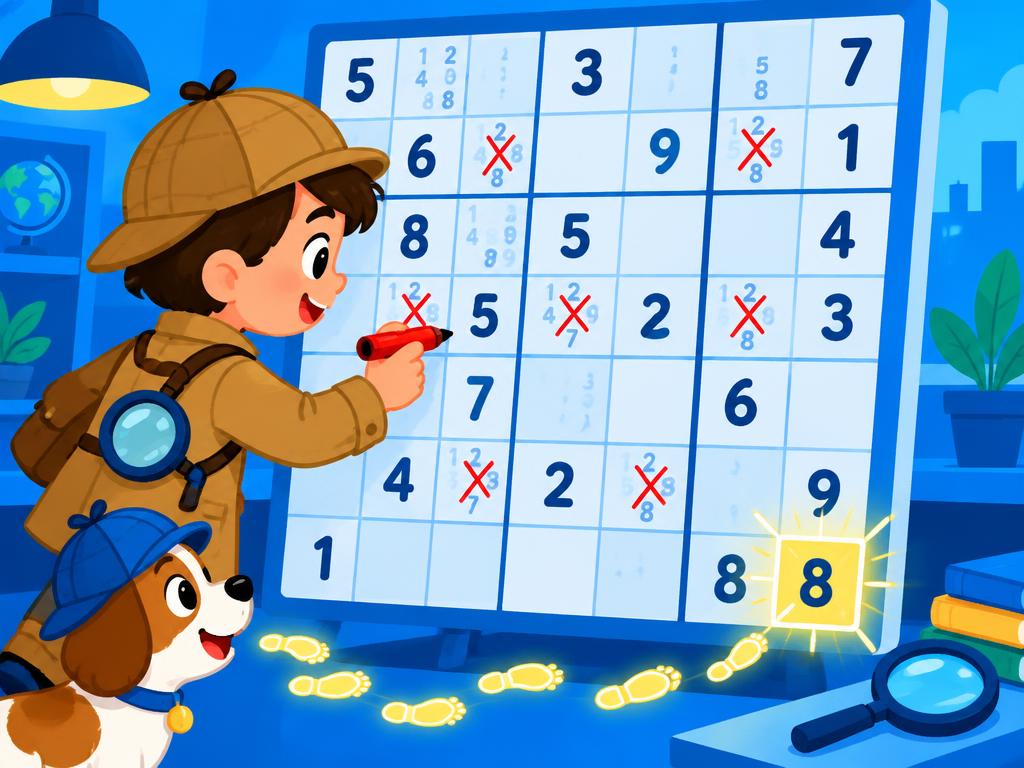
Sudoku is really a giant process of elimination. Imagine you are investigating the question: where can the number 5 go?
Find the clues. Eliminate the impossible. Find the only possibility. Check your answer.
- Find the Clueslook for where the number 5 already appears
- Eliminate Impossible Squaresif a square shares a row, column, or box with another 5, it cannot contain 5
- Find the Possibilityif only one square remains, you have solved the clue
- Check Your Workmake sure the answer follows all three golden rules
Pencil Marks
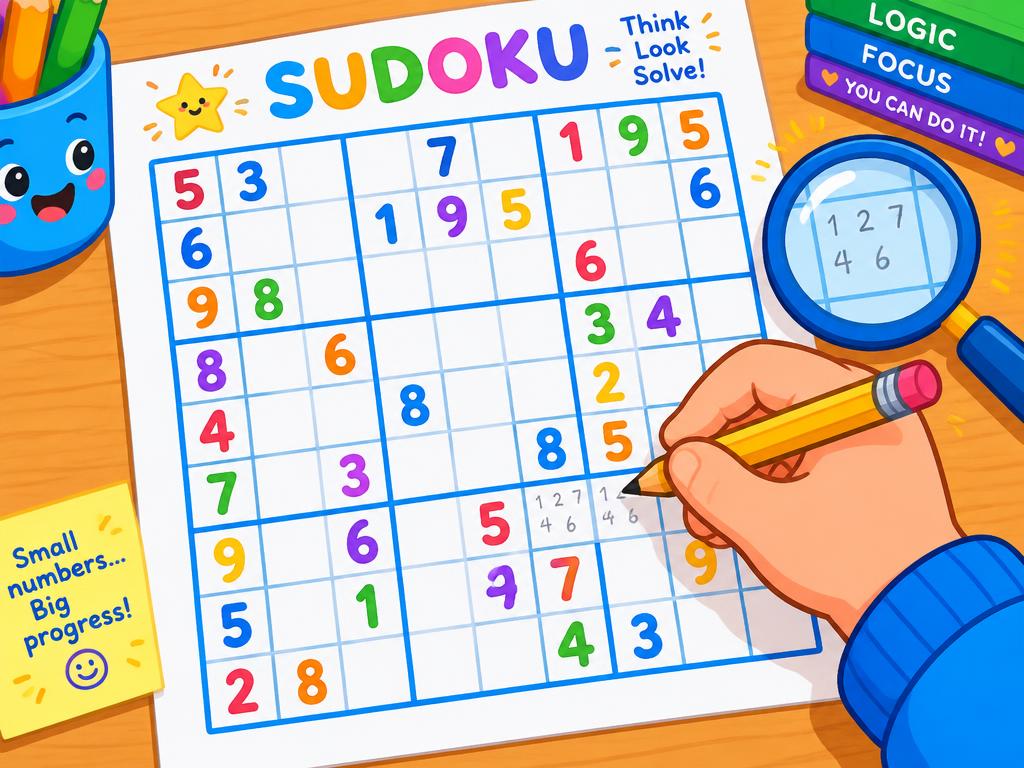
Sometimes you will not know the answer immediately. That is completely normal. You can write tiny possible numbers inside an empty square, like 2 or 7. Later, another clue might show that 2 cannot fit. Then only 7 remains!
A possibility is not an answer. Pencil marks are clues, not confirmed numbers. Do not commit until you have enough evidence.
Sudoku Detective Techniques
Once you understand the basics, you can start using more powerful techniques.
Sudoku gets interesting when one clue unlocks another!
- 1️⃣ Single Missing Numberonly one number is missing from a row, column, or box. The easiest clue
- 2️⃣ Scanningchoose one number and follow it through the puzzle. Each existing 7 blocks certain spaces
- 3️⃣ Naked Singleif only ONE number remains possible in a square, you have found it
- 4️⃣ Hidden Singlea number that can only go into ONE square within a row, column, or box has found its hidden home
- 5️⃣ Pairstwo squares with the same two possibilities mean other squares in that unit cannot use those numbers
The Sudoku Chain Reaction
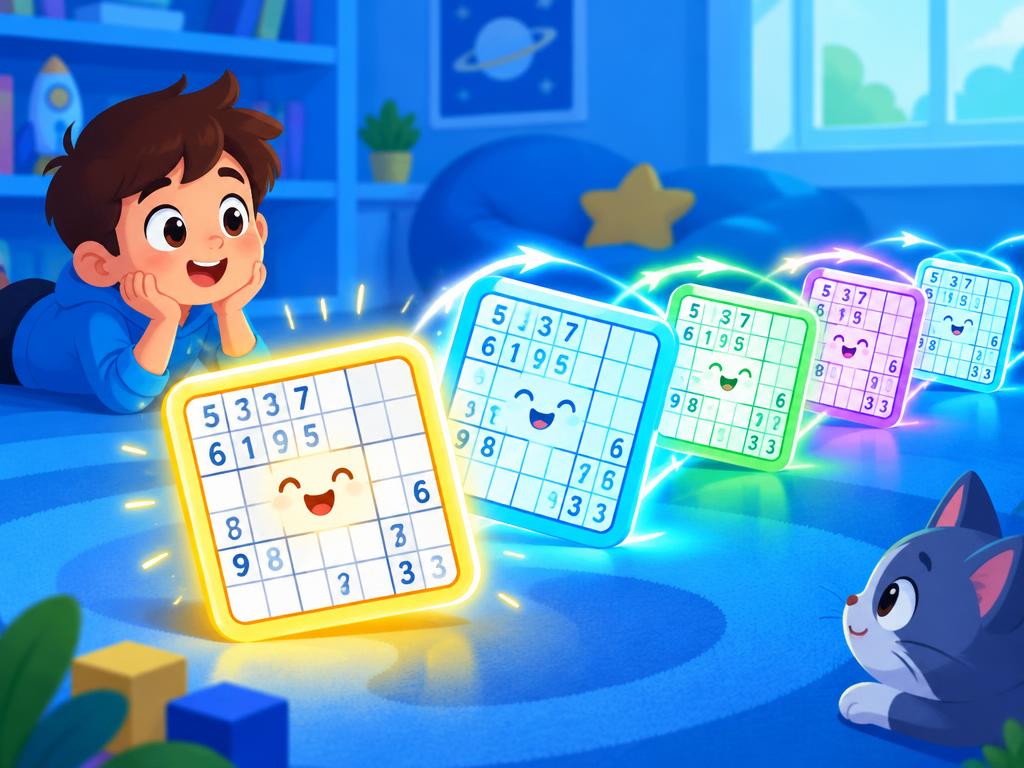
One answer can create another answer, and that answer can create another. You solve 7, so another square cannot be 7, so only 3 can fit there, and that new 3 blocks another square. A new answer appears!
One clue can unlock the next clue. That is why Sudoku can feel like solving a mystery.
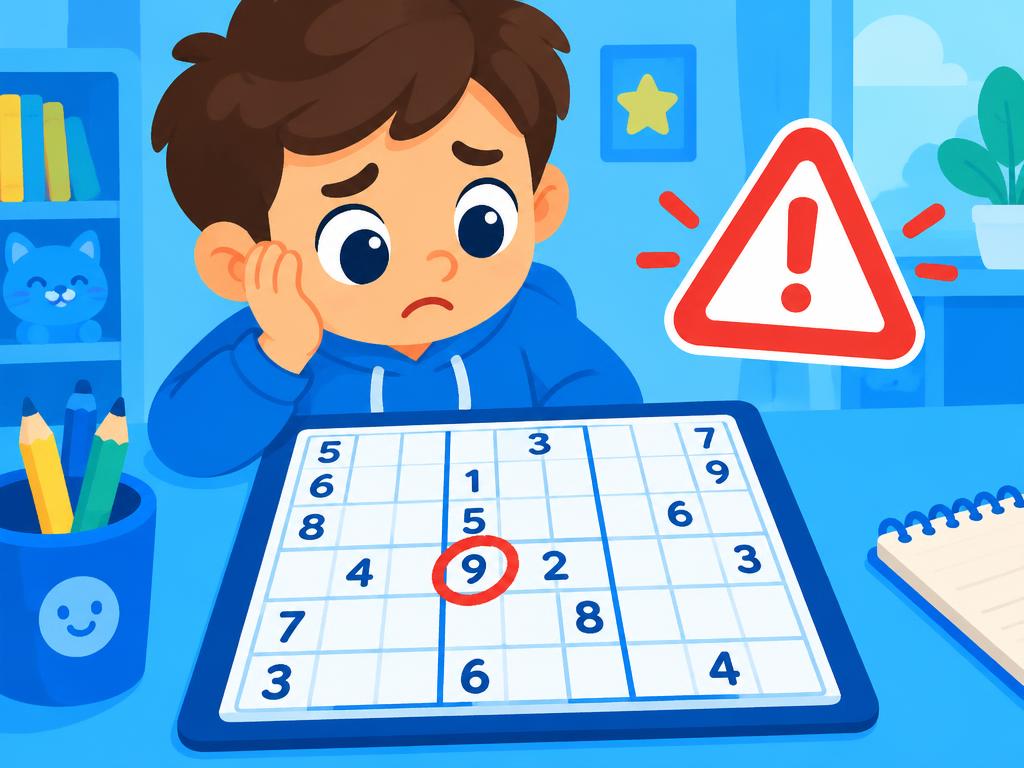
Common Sudoku Mistakes
Even experienced players can make mistakes.
If you have to guess, stop and search for another clue.
- Guessingit can lead you down the wrong path. Search for another clue first
- Checking Only the Rowa number might fit the row but break the column or box rule
- Forgetting the Boxthe 3 × 3 box is just as important as the row and column
- Trusting Pencil Marksa possible number is not a confirmed answer
- Repeating a Numberevery row, column, and box can contain each number only once
- Ignoring a Mistakeif the puzzle suddenly becomes impossible, go back and check your earlier answers
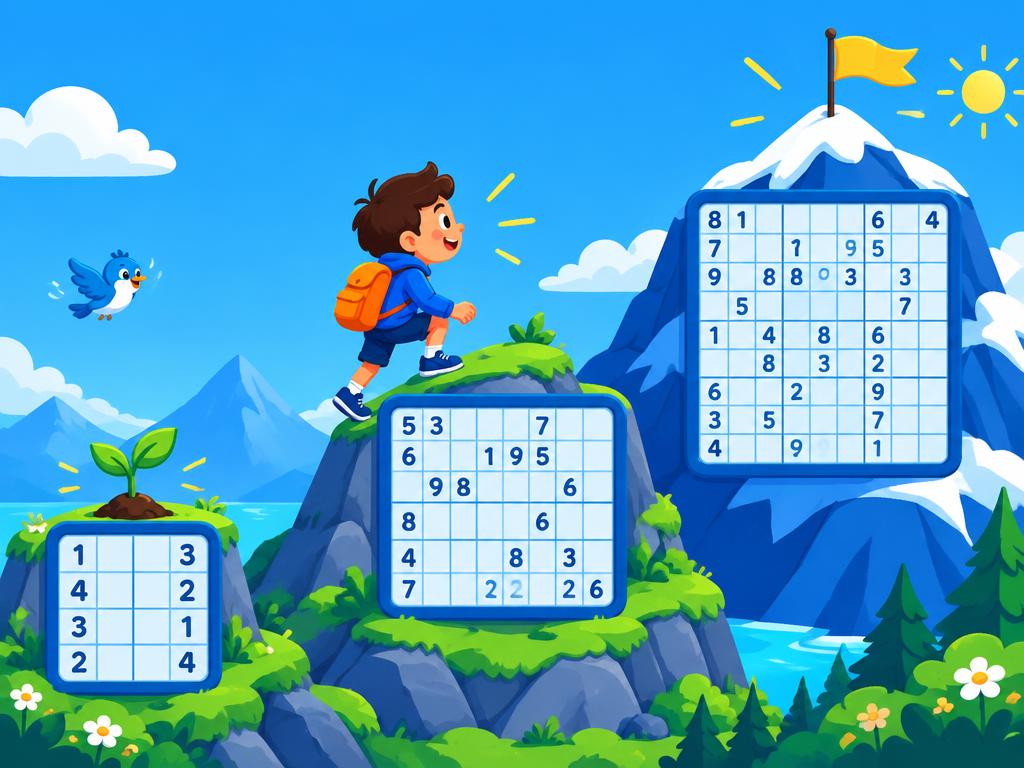
Easy, Medium and Hard Sudoku
Not every puzzle is difficult for the same reason, and difficulty is not simply about how many empty squares there are.
More empty squares does not automatically mean a harder puzzle. The real question is how much logical thinking it requires.
- Easylots of obvious clues and many single missing numbers. Perfect for learning
- Mediumyou may need scanning, pencil marks, and hidden singles. Several clues work together
- Hardclues connect across different parts of the grid. You think several steps ahead
Does Sudoku Make You Smarter?
Sudoku is not a magic intelligence machine, but it can give your brain useful practice.
You do not have to solve everything at once. Solve one small problem, then use that answer to solve the next one.
- Concentrationyou stay focused on the clues
- Logical Thinkingyou use rules to eliminate impossible answers
- Pattern Recognitionyou notice numbers and relationships across the grid
- Patiencesome puzzles take time
- Checking Your Workyou learn to look back and test your decisions
- Problem Solvinga huge puzzle becomes a collection of smaller problems
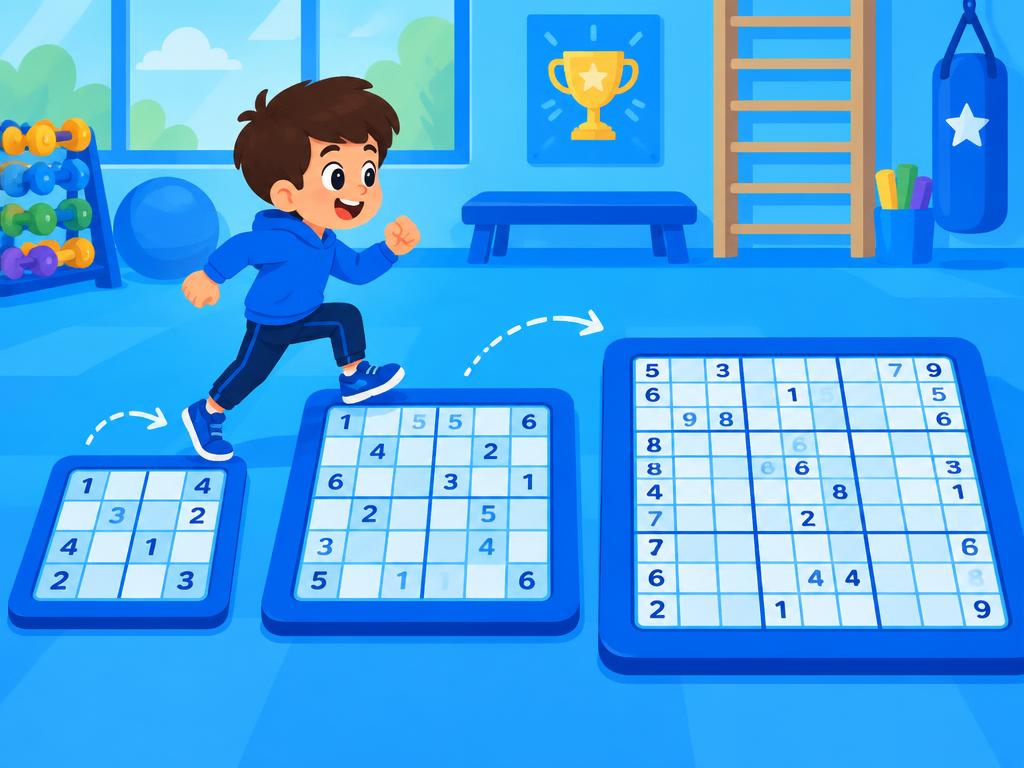
Training Grids
Before tackling a full 9 × 9 Sudoku, you can practise with smaller grids. The same detective rules still apply.
- 4 × 4 Sudokuuses the numbers 1 to 4 and smaller 2 × 2 boxes
- 6 × 6 Sudokuuses the numbers 1 to 6 and smaller 2 × 3 rectangles
- 9 × 9 Sudokuthe classic grid. Nine rows, nine columns, nine boxes, numbers 1 to 9
Spot the Mistake!
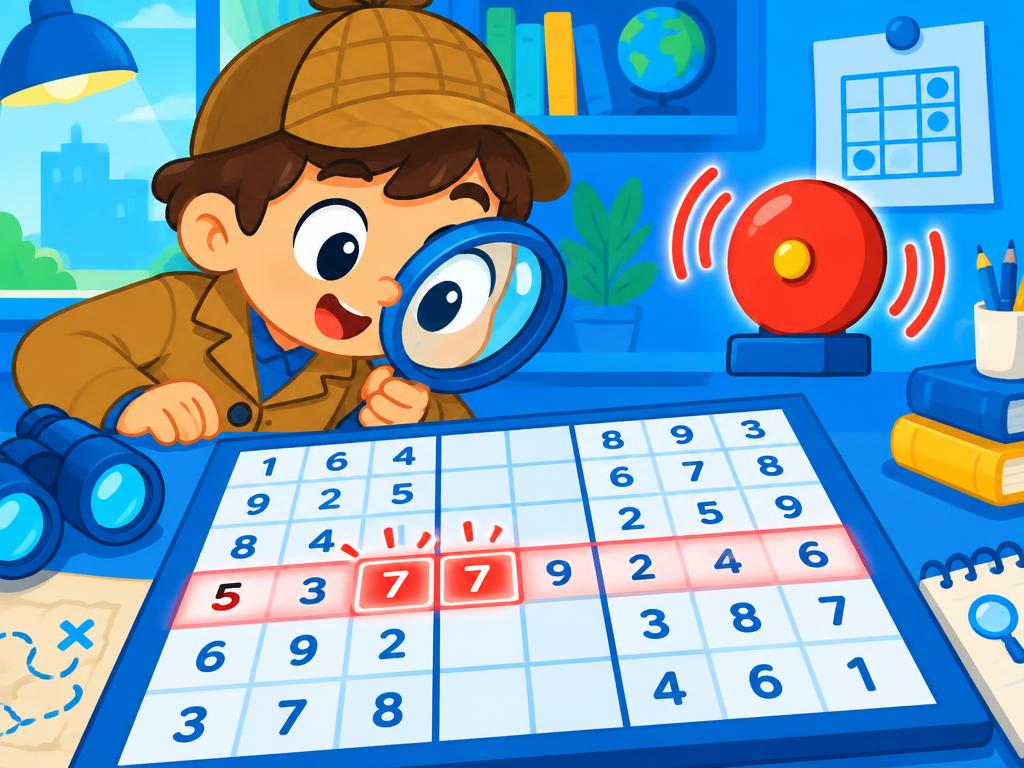
A Sudoku detective must also catch errors. Imagine you see 1 2 3 4 5 6 7 8 7. Something is wrong! The number 7 appears twice. Check the row, check the columns, check the box, and find where the mistake began.
Do not simply fix the last number you wrote. Find the clue that caused the mistake.
The Sudoku Thinking System
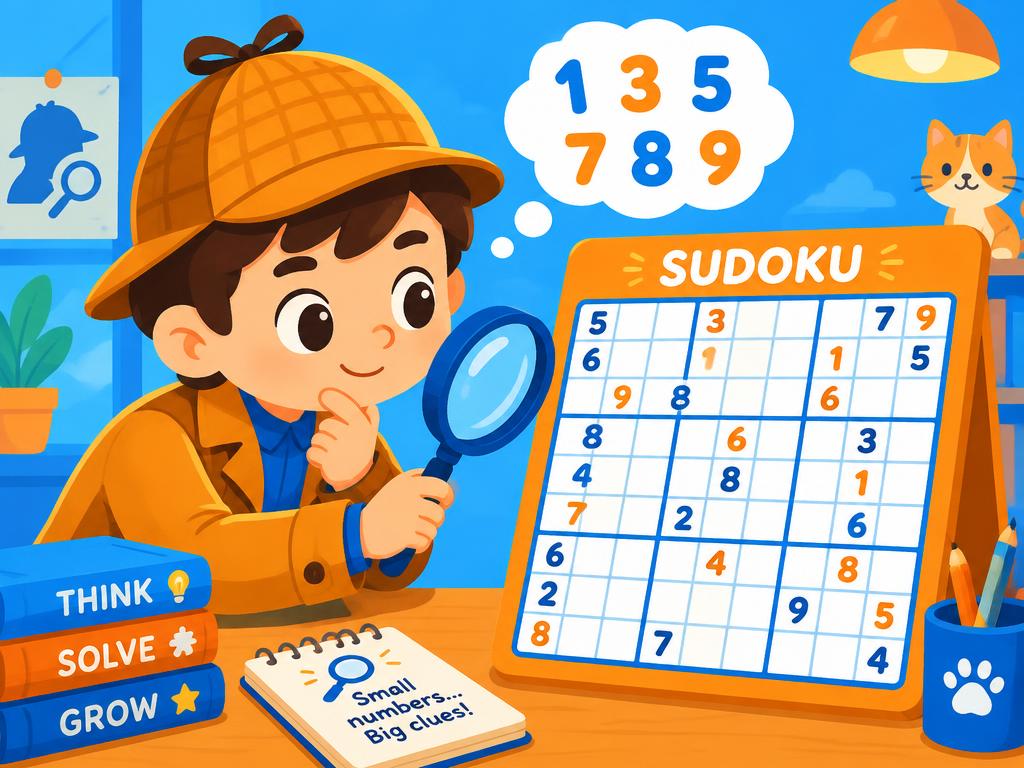
Before writing a number, try this routine. Then start again.
LOOK. CHECK. ELIMINATE. SOLVE.
- LOOKwhat numbers are already around this square?
- ROWwhich numbers already appear in the row?
- COLUMNwhich numbers already appear in the column?
- BOXwhich numbers already appear in the 3 × 3 box?
- ELIMINATEcross out impossible numbers
- FINDis there only one possibility left?
- CHECKdoes your answer follow all three golden rules?
- WRITEonly then place the number

Sudoku Around the World
Sudoku is one of the world's best known logic puzzles. You can find it in newspapers, puzzle books, websites, apps, classrooms, and competitions where players race to solve puzzles accurately.
- Schoolsa logic and problem solving activity
- Newspapersa popular puzzle around the world
- Appsdigital Sudoku can check moves, give hints, and create puzzles at different levels
- Competitionsplayers race to solve puzzles accurately
Sudoku and Computers
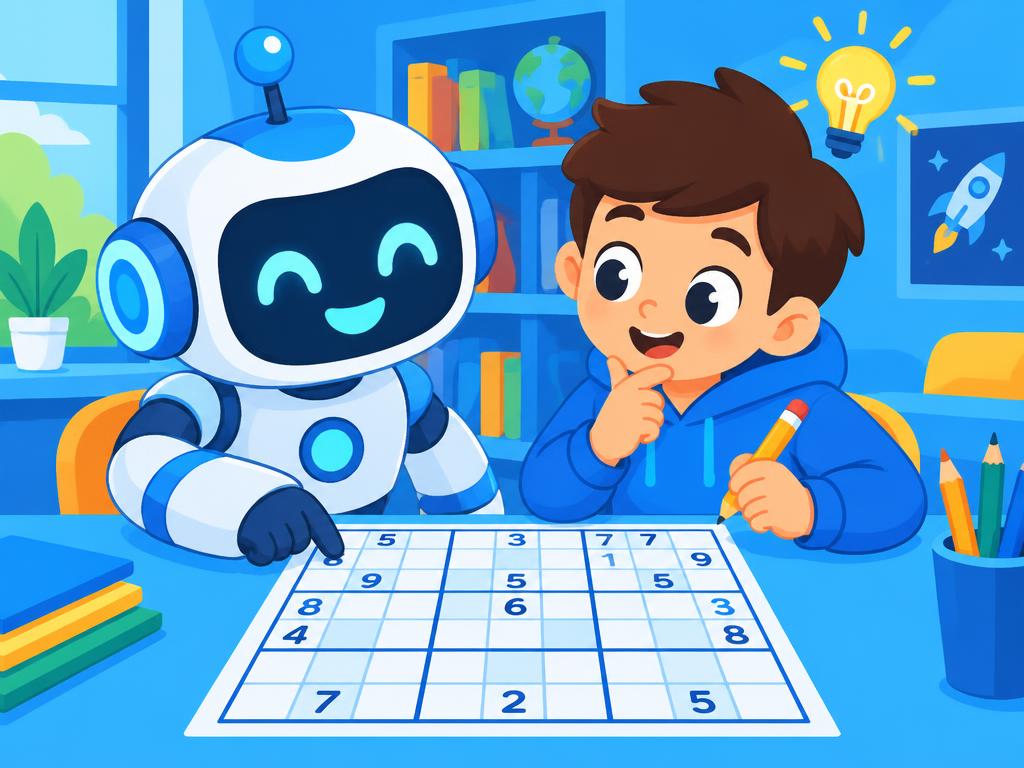
Computers can solve Sudoku extremely quickly by testing possible numbers far faster than a human. But solving it yourself gives you something different: the experience of discovering the logic step by step.
The computer can find the answer. The fun is understanding how you found it.
Amazing Sudoku Facts
81 Squares
A standard grid contains 81 squares: 9 rows × 9 columns.
9 Boxes
The grid contains nine smaller 3 × 3 boxes.
No Arithmetic Needed
You never add, subtract, multiply, or divide in a standard Sudoku.
Chain Reactions
One solved square can unlock several others.
No Guessing Required
A well designed Sudoku can be solved through logic alone.
Accuracy Matters
A fast wrong answer does not solve a Sudoku. Be logical and correct.
Quick Summary
🔢 Numbers
Use numbers 1 to 9
📏 Rows
Each row needs every number once
⬇️ Columns
Each column needs every number once
📦 Boxes
Each 3 × 3 box needs every number once
❌ Eliminate
Remove impossible choices
🧠 Logic
Use evidence instead of guessing
Sudoku Dictionary
Grid
The complete collection of squares that makes up the puzzle
Row
A horizontal line of squares across the grid
Column
A vertical line of squares down the grid
Box
One of the nine 3 × 3 sections in a standard Sudoku
Cell
A single square in the grid
Clue
A number already placed in the puzzle to help you solve it
Candidate
A number that could possibly fit into an empty cell
Pencil Mark
A small note showing possible numbers for an empty cell
Naked Single
A cell with only one possible candidate
Hidden Single
A number that can go in only one cell within a row, column, or box
Scanning
Looking across rows, columns, and boxes to find where a number can fit
Pair
Two cells with the same two possibilities, removing those numbers from other cells
Elimination
Removing numbers that cannot legally fit in a cell
Solution
The completed grid where every rule is satisfied
Deduction
Working out what must be true from the information you already have
You Are Now a Sudoku Expert!
Great Sudoku players do not guess. They collect clues, eliminate impossible choices, spot patterns, and build one answer from another. Find the clue. Eliminate the impossible. Solve the puzzle.