Round Up Starting 14 June 2026: Family & Education News Digest
Welcome to this week's news, all summarised with amazing AI.
Modern parenting requires new strategies to help children thrive in an increasingly digital world while developing essential life skills, values, and digital literacy.
👨👩👧 Parents News Summary
⚖️ Work-Life Imbalance Is Now the Norm
52% of households now have both parents working full-time, making the struggle to balance work and family a structural reality rather than a personal failing.
👩👧 Mothers Bear the Heaviest Load
Two-thirds of working mothers feel they cannot give 100% at home, and over half feel the same at work, pointing to systemic gaps, not individual shortcomings.
👨👦 Fathers Are Struggling Too
Half of working fathers also report falling short at home, challenging the assumption that the mental load rests solely with mothers.
🧘 Personal Time Is a Health Necessity
New research shows that even small amounts of personal time for parents measurably reduce physiological stress markers on the very same day.
🏛️ Policy Changes Are Urgently Needed
Paid sick leave and more affordable childcare are identified as the most impactful policy interventions for working families today.
🏫 Schools Have a Role in Parental Wellbeing
Normalising conversations about parental rest and recovery in school settings can have positive downstream effects on children's emotional environments at home.
🌱 Working Parents, Stress and Recovery
 Working Parents Are Stretched Thin, Pew FindsA Pew Research survey of 2,242 working parents confirms balancing work and parenting has become structurally unsustainable for most households.
- A Pew Research survey of 2,242 working parents confirms balancing work and parenting has become structurally unsustainable for most households.
- Two-thirds of working mothers feel they cannot give 100% at home; over half feel the same about their performance at work.
- Half of working fathers also report falling short at home, and around a third feel they fall short at work too.
- The share of dual-income households where both parents work full-time has risen from 31% in 1975 to 52% today.
- Paid sick leave and affordable childcare are cited as the most impactful policy interventions for working families.
 Personal Time Helps Parents Recover from StressParents who carve out even small amounts of personal time show measurably healthier physiological stress responses the same day.
- New research finds that parents who carve out even small amounts of personal time show measurably healthier physiological stress responses the same day.
- The study tracked both mothers and fathers, linking brief breaks from parenting duties to improved emotional wellbeing and reduced physical stress markers.
- Personal time is often framed as a luxury, yet the data shows even modest recovery time produces biological benefits for parents.
- For school staff, this research reinforces supporting parental wellbeing as a precondition for effective parenting, not a separate indulgence.
- Normalising parental rest conversations in schools, workplaces, and health settings could have positive downstream effects on children's home environments.
🍎 Teachers News Summary
🤖 AI Access in Schools Is Deeply Uneven
Students' AI exposure varies wildly based on state standards, district policies, and individual teacher decisions, with no coherent national approach in place.
📡 A New Digital Divide Is Emerging
Students in well-resourced schools are building AI literacy while peers elsewhere are blocked or simply lack devices, mirroring early internet inequities.
🧠 "Cognitive Surrender" Is a Real Risk
Experts warn that students are increasingly offloading thinking to AI rather than developing their own reasoning, undermining deep learning and genuine comprehension.
📚 Teachers Are Under-Prepared
Barely half of schools have provided any AI professional development since 2022, despite teachers being the frontline decision-makers on how AI is used day to day.
🏛️ Federal Framework Momentum Growing
A US Senate hearing signals growing political will for a federal K-12 AI framework, though debate over enabling vs. restricting AI use remains sharply divided.
🧭 Clear Guidance Is the Urgent Need
Without coherent district-level AI policies, the technology risks deepening rather than narrowing existing attainment gaps between students.
💻 AI in Schools: Equity and Guardrails
 Students Are Experiencing AI in Very Different WaysStudents' AI exposure in schools is deeply uneven, shaped by conflicting state standards, district policies, and individual teacher choices.
- Students' AI exposure in schools is deeply uneven, shaped by conflicting state standards, district policies, and individual teacher choices rather than any national approach.
- Some students regularly use AI writing and brainstorming tools; others have the same tools blocked or unavailable due to device or network limitations.
- This inconsistency raises equity concerns comparable to those seen during the early years of internet access in schools.
- Some schools switched AI tools mid-year after age restrictions were introduced, causing disruption that fell hardest on already-challenged students.
- Educators are calling for clearer district-level AI guidance, warning that without coherent policy, the technology will deepen existing attainment gaps.
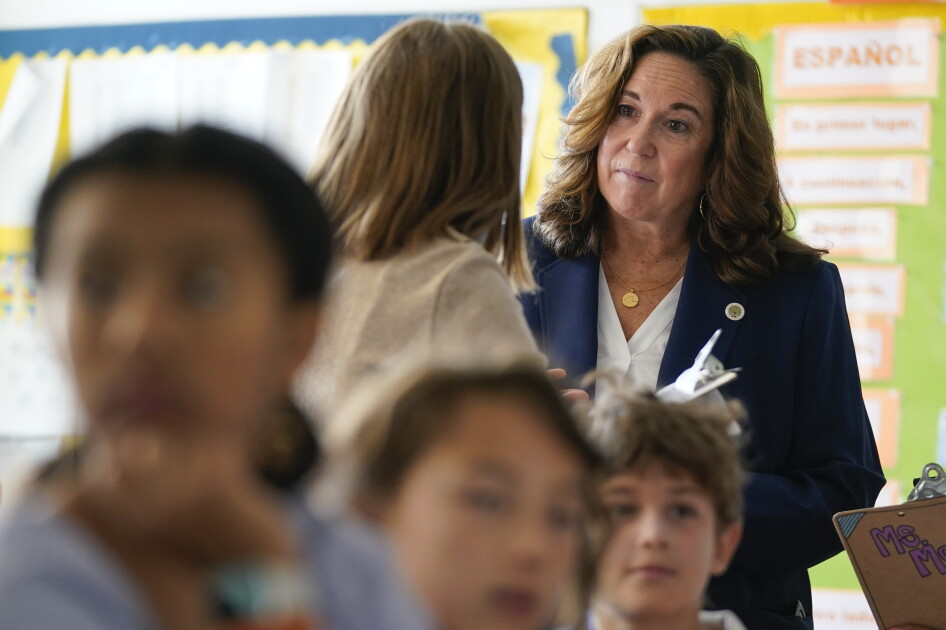 Senate Hearing: AI That Protects Human JudgmentEducators called for guardrails that preserve critical thinking and protect against over-reliance on AI in classrooms.
- A US Senate subcommittee hearing on 16 June examined AI in schools, with educators calling for guardrails that preserve critical thinking and protect against over-reliance.
- Experts warned of "cognitive surrender", students offloading thinking to AI, with evidence that deep learning and genuine comprehension are being undermined in some classrooms.
- Delaware's Secretary of Education testified that barely half of schools have offered any AI professional development since 2022, despite teachers making frontline decisions daily.
- Senators flagged the tension between AI's potential to personalise learning and reduce teacher workload versus embedding technology before its impacts are properly understood.
- The hearing signals growing momentum for a federal K-12 AI framework, though whether it should enable or restrict use remains sharply debated.
✨ Extra Pearls
For Parents
- Schedule micro-breaks deliberately. Even 10 to 15 minutes of genuine personal time daily, a walk, quiet reading, or music, can reset your stress response and make you more emotionally present for your children.
- Talk to your child about AI honestly. Ask them what tools they use at school and at home. Encourage them to use AI as a starting point, not a final answer, and model critical thinking out loud.
- Reframe "good enough" as a strength. Feeling that you can't give 100% everywhere is a sign of a full life, not failure. Modelling resilience and self-compassion teaches children invaluable emotional regulation skills.
- Advocate for workplace flexibility. Familiarise yourself with your rights around paid sick leave and flexible working. Structural change begins when individuals surface the conversation with employers.
- Connect with your school community. Schools that support parental wellbeing create better outcomes for children. Attend events, engage with staff, and don't hesitate to share what your family needs.
For Teachers
- Set a classroom AI philosophy and share it. Even without district-level policy, you can communicate clearly to students and parents how AI is and isn't used in your classroom, building trust and consistency.
- Design tasks that AI cannot easily complete. Prioritise assignments requiring personal reflection, verbal justification, or real-world observation. This builds the human reasoning skills AI cannot replace.
- Recognise signs of parental stress in students. Children from high-stress households may show changes in attention, mood, or engagement. A gentle, non-judgmental check-in can open doors before issues escalate.
- Seek out AI professional development proactively. Don't wait for your school to act: online courses, peer networks, and subject-specific communities offer accessible CPD on AI integration right now.
- Model intellectual humility with AI. Show students that you too are still learning how to use these tools wisely. Demonstrating curiosity and caution together is one of the most powerful lessons you can give.
Remember: small, consistent actions by parents and teachers create compounding benefits for every child.
Thank You for Reading!
🧠 Stay Curious
Keep reading news from around the world to learn amazing new things every day!
🤔 Ask Questions
Wondering about something you read? Ask a grown up to help you find more information!
📚 Share Knowledge
Tell your friends and family about the cool facts you learned today!
Check back next week for more exciting news stories from around the world!
💌 We Value Your Feedback!
How can we improve our insights? We're constantly working to enhance our coverage. Your input helps us deliver more relevant and valuable information.
💡 Suggest Topics
What sectors or regions would you like to see covered in more depth?
🎨 Format Preferences
Would you prefer more visualizations, case studies, or expert interviews?
📅 Update Frequency
How often would you like to receive these insights?