Starting 15 March 2026: Billionaire Habits & The AI Classroom Clash
Welcome to this week's news, all summarised with amazing AI.
Modern parenting requires new strategies to help children thrive in an increasingly digital world while developing essential life skills, values, and digital literacy.
👨👩👧 Parents News Summary
🌱 Grounded Values
Raising responsible children means prioritising values over material wealth, even billionaires agree.
🧘 Calm Authority
The emerging parenting style blending warmth with clear boundaries is gaining expert attention.
🤖 Kids & AI
There is a surprising gap between what parents think their teens do online and how teens actually use AI tools.
💬 Open Dialogue
Many families lack conversations about AI use; experts urge parents to start talking.
❤️ Love + Limits
Effective parenting balances consistent discipline with clear expressions of love and emotional validation.
🚀 Fostering Independence
Encouraging personal responsibility and achievement rather than dependence is key to raising purposeful children.
🌱 Billionaire Parenting | Calm Authority | How Teens Really Use AI
 How a billionaire dad approaches parenting: fly economy, shop at Zara, and tell them you love themJohn Caudwell flies his kids economy, shops modest brands, and centres parenting on values, discipline and clear expressions of love.
- British billionaire John Caudwell says he flies his kids economy, shops at Primark, and always tells them he loves them.
- He emphasises raising children with a grounded mindset despite wealth by avoiding excessive luxury and encouraging exposure to normal everyday life.
- He prioritises quality family time and consistent parental presence, even during demanding business periods, while relying on structured schooling for daily routine and development.
- He limits material indulgence by avoiding designer excess, using modest brands, traveling economically for most family members, and discouraging entitlement.
- He applies controlled financial support tied to responsibility and education, encouraging independence and personal achievement rather than providing unrestricted spending.
 What is Calm Authority Parenting? Here's How Experts Describe ItA blend of gentle parenting and FAFO parenting, the calm authority style includes both boundaries and warmth.
- Calm authority parenting blends gentle parenting, focused on emotions, with FAFO parenting, focused on natural consequences, combining warmth and clear boundaries.
- Experts such as Jen Hartstein and Ericka Sóuter note that gentle parenting supports emotional awareness but may lack guidance on behaviour and real-world expectations.
- FAFO parenting can build resilience and independence by allowing children to experience consequences, but some parents view it as too harsh or emotionally difficult.
- Calm authority aims to balance the two by combining empathy with consistent rules and follow-through on consequences, avoiding both permissiveness and strict authoritarian control.
- The approach emphasises validating children's feelings while still enforcing limits and expectations, both at home and in structured environments like school.
 Parents think they know how kids use AI. They don'tNew surveys asked teens how they use AI. Parents have no idea what's going on, from homework to emotional support.
- There is a significant gap between parents' perceptions and teens' actual use of AI, with many parents unaware of how frequently and in what ways their children use it.
- Surveys show teens use AI more than parents realise, including for homework, research, creative tasks, casual conversation, and sometimes emotional support.
- Communication is lacking in many households, with a large portion of parents reporting they have never discussed AI use with their children.
- Some teens are using AI for social or emotional purposes, which raises concerns among parents and experts about over-reliance and potential behavioural or mental health risks.
- Experts emphasise the need for open dialogue, guidance, and monitoring, as teens are generally more comfortable with AI and may navigate its use independently without parental input.
🍎 Teachers News Summary
🧑🏫 Human in Control
St. Paul educators won contract protections ensuring AI cannot replace human judgement in the classroom.
🛡️ Job Protections
The agreement prevents AI from being the sole basis for disciplining or removing educators; human involvement is required.
🔍 AI Dependency Signs
Teachers can identify students who rely on AI immediately, before thinking independently, through specific behaviours.
🧠 Cognitive Debt Risk
Over-reliance on AI is reducing students' ability to reason, persist through uncertainty, and evaluate evidence.
🇺🇸 National Movement
The St. Paul agreement reflects a growing national effort by unions and schools to establish AI guidelines and training.
⚖️ Balancing AI Use
Experts recommend handwriting, music, and logic games to strengthen cognition alongside responsible AI use.
💻 Keeping Humans in Control of AI | The 3 Behaviours That Reveal AI Dependency
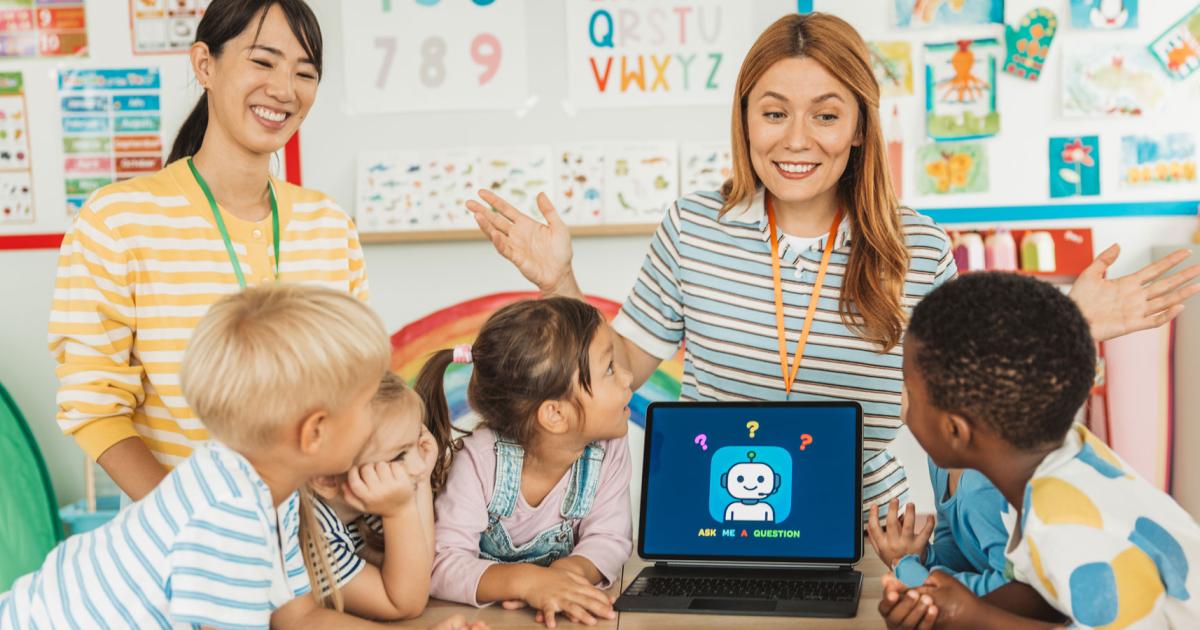 Bargaining for the future: How St. Paul educators are keeping humans in control of AIOne of the nation's first K-12 contracts with explicit AI safeguards keeps human judgement, relationships and accountability at the center of the classroom.
- Educators in St. Paul negotiated contract language to ensure AI does not replace human teachers and that human judgement remains central in classrooms.
- The union raised concerns about mandatory AI tools influencing instruction and emphasised the importance of teachers retaining control over lesson design and student assessment.
- The final contract includes protections against using AI as the sole basis for disciplining, transferring, or non-renewing educators, requiring human involvement in such decisions.
- While initial proposals sought stronger job protections, the agreement ultimately prevents immediate job loss due to AI but still allows staffing adjustments through attrition.
- The agreement reflects a broader national effort by unions and school systems to establish guidelines, training, and bargaining practices as AI becomes more integrated into education.
 Teachers Say They Can Almost Always Tell Which Kids Use AI Instead Of Their Own Brains By These 3 BehaviorsTeachers share the three behaviors of kids who use AI often, as well as the potential impacts and what parents can do about it.
- Teachers report a growing trend of students relying on AI tools early in the problem-solving process, often skipping initial independent thinking and immediately seeking AI-generated answers.
- Students who frequently use AI show lower tolerance for confusion, struggling to persist through uncertainty or explain their reasoning without external assistance.
- Some students begin treating AI outputs as unquestionable authority, often citing responses like those from ChatGPT as definitive rather than critically evaluating them.
- Educators warn this behaviour contributes to "cognitive debt," where over-reliance on AI reduces opportunities to practise essential skills like reasoning, inquiry, and evidence evaluation.
- Experts, including Dr. Ryan Stevenson, recommend balancing AI use with activities that strengthen cognition, such as handwriting practice, music training, and logic-based games to support attention, memory, and critical thinking.
✨ Extra Pearls 💎
For Parents: 5 Bonus Tips
- Create a Family AI Agreement 🤝: set clear, agreed-upon rules about when, why, and how AI tools can be used at home; make it a family conversation, not a top-down rule.
- Model Healthy Screen Habits 📵: children mirror parental behaviour. Be intentional about how you use technology in front of your kids; put the phone down during meals and conversations.
- Celebrate Effort Over Output 🌟: praise the process of thinking, struggling, and trying, not just the final result. This builds resilience and reduces the temptation to outsource thinking to AI.
- Stay Curious Together 🔍: explore AI tools with your children rather than banning them outright. Guided exploration builds digital literacy and strengthens your relationship as a trusted guide.
- Choose Connection Over Correction ❤️: before redirecting a behaviour, connect emotionally first. A child who feels understood is far more receptive to guidance and limits.
For Teachers: 5 Bonus Tips
- Design AI-Proof Assessments 📝: shift towards oral defences, process portfolios, in-class reflections, and open-ended discussions that require genuine thinking and cannot be easily generated by AI.
- Teach Productive Struggle 💪: normalise confusion as part of learning. Create classroom cultures where sitting with uncertainty is valued and where asking a teacher is encouraged before turning to AI.
- Introduce AI Literacy Units 📚: help students understand how large language models work, their limitations, biases, and appropriate uses; critical thinking about AI should be part of the curriculum.
- Collaborate on School-Wide AI Policies 🏫: advocate within your school for transparent, teacher-informed AI policies rather than waiting for top-down mandates that may not reflect classroom realities.
- Reconnect with Analogue Learning ✏️: intentionally incorporate handwriting, drawing, music, physical movement, and logic puzzles into daily routines to build the cognitive foundations that AI use can erode.
Remember: Technology is a tool, wisdom is knowing when to use it, and when to put it down. 🌟
Thank You for Reading!
🧠 Stay Curious!
Keep reading news from around the world to learn amazing new things every day!
🤔 Ask Questions!
Wondering about something you read? Ask a grown-up to help you find more information!
📚 Share Knowledge!
Tell your friends and family about the cool facts you learned today!
Check back next week for more exciting news stories from around the world!
💌 We Value Your Feedback!
How can we improve our insights? We're constantly working to enhance our coverage of Insights. Your input helps us deliver more relevant and valuable information.
💡 Suggest Topics
What sectors or regions would you like to see covered in more depth?
🎨 Format Preferences
Would you prefer more visualizations, case studies, or expert interviews?
🗓️ Update Frequency
How often would you like to receive these insights?