
Round Up Starting 21 June 2026: Screens, Schedules & Schools
Welcome to this week's news, all summarised with amazing AI.
Modern parenting requires new strategies to help children thrive in an increasingly digital world while developing essential life skills, values, and digital literacy.
👨👩👧 Parents News Summary
📱 Phone vs. Presence
New research links parental phone distraction to anxious and avoidant attachment patterns in teens; quality of attention matters more than time spent together.
🔗 Secure Attachment at Stake
600 U.S. teenagers surveyed (aged 12 to 17) show that device related distraction predicts both anxious and avoidant attachment, a key predictor of lifelong mental health.
💼 Dual Income Families Rising
52% of U.S. couples now both work full time, up from 31% in 1975. Families are financially better off but emotionally stretched thin.
⚖️ The Gender Gap Persists
Working mothers still carry a disproportionate share of parenting and household tasks, even in dual income households; a structural, not just personal, challenge.
🏠 Support Gaps Are Real
Paid leave, flexible schedules, and remote work options are the benefits parents need most, yet fewer than half have access to them.
🏫 Schools Must Respond
Many families arrive at the school gate already stretched. Compassionate, inclusive engagement strategies are essential for educators to bridge this gap.
🌱 Phones, Attachment and Working Families
 Mommy, Do You Love Your Phone More Than Me?New research links parental phone distraction to anxious and avoidant attachment in teens; intentional phone free presence at key moments matters more than time logged.
- Adolescents who perceive their caregiver's phone use as a problem are significantly more likely to show anxious or avoidant attachment patterns, according to new research analysed by Karen E. Dill Shackleford Ph.D.
- Teens who felt their parent was frequently distracted by a device reported feeling less secure and less able to rely on that parent when they needed to talk about something important.
- The underlying study, published in Frontiers in Psychology, surveyed 600 U.S. teenagers aged 12 to 17 and found device related distraction predicted both anxious and avoidant attachment.
- Secure attachment formed in adolescence is a strong predictor of long term mental health, relationship quality, and emotional resilience.
- The practical implication is clear: intentional, phone free presence during key moments, mealtimes, school pick up, bedtime, matters more than overall time logged.
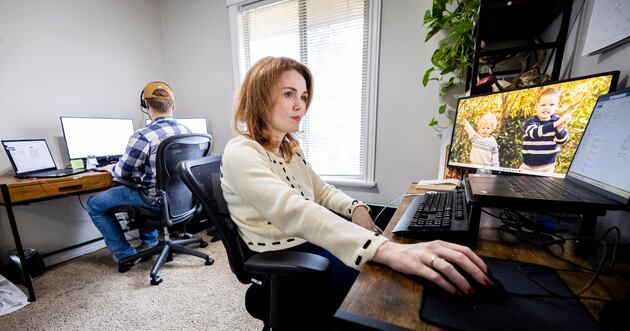 Pew: Dual Income Families Rise, but Support Gaps RemainA Pew survey of 2,242 working parents finds 52% of couples now both work full time, with gender gaps and missing benefits stretching families thin.
- A major Pew Research Center survey of 2,242 U.S. working parents reveals that dual income families now make up 52% of different sex couples, up from 46% a decade ago and 31% in 1975.
- While 83% of families with two full time earners say the arrangement benefits their finances, the human cost is significant: parents describe being expected to work like I don't have kids and parent like I don't have a job.
- Gender imbalances persist: working mothers report difficulty balancing work and family at significantly higher rates than fathers, and still carry a disproportionate share of parenting tasks and household chores.
- There are large gaps between the benefits parents need most, paid leave, flexible scheduling, remote work, and what is actually available to fewer than half of respondents.
- For school leaders, this data reinforces that many families arrive already stretched: understanding this context is important for designing inclusive family engagement strategies and responding compassionately to attendance and homework challenges.
🍎 Teachers News Summary
🏙️ NYC Pauses AI Rules
New York City delayed its comprehensive school AI guidance after nearly 6,500 public comments, leaving thousands of teachers without clear district wide rules at a critical moment.
⚡ Policy Lagging Behind
Nationally, three quarters of school districts now have some AI guidelines, but quality varies enormously, creating significant equity gaps between well resourced and under resourced schools.
👓 Wearable AI Cheating Rises
Universities returned to in person exams to combat AI cheating, but AI enabled smart glasses with hidden cameras and real time text are now undermining this strategy.
📋 Princeton Acts
Princeton University voted in May 2026 to require proctors in every in person exam room from July 1, ending a 133 year tradition of unproctored testing in direct response to AI cheating.
🔄 Rethink Assessment
Experts argue the most effective long term solution is to redesign assessments, prioritising oral exams, portfolio based work, and process focused tasks over a technological arms race.
🌍 A Global Tension
From NYC to universities worldwide, the same tension plays out: the pressure to move quickly on AI integration is outpacing the research, safeguarding frameworks, and teacher training needed.
💻 AI Rules, Cheating and Exams
 NYC Delays AI Guidance for Schools After BacklashNearly 6,500 public comments pushed New York City to pause its school AI guidance, leaving teachers without clear rules as adoption accelerates.
- New York City's education department has delayed its comprehensive AI guidance for schools after the March 2026 draft policy triggered fierce public backlash, with nearly 6,500 comments submitted during the consultation period.
- First Deputy Chancellor Danielle Giunta cited the shifting national conversation around AI in schools and the volume of community feedback as reasons for stepping back from the original June deadline.
- The delay leaves thousands of teachers and school leaders without clear district wide rules on AI use at a moment when adoption is accelerating rapidly and policy is struggling to keep pace.
- Nationally, three quarters of school districts now have some form of AI guidelines, a notable jump from just a year ago, but the quality and scope vary enormously, creating significant equity gaps.
- The NYC situation illustrates a tension playing out worldwide: the pressure to move quickly on AI integration is running ahead of the research, safeguarding frameworks, and teacher training needed to implement it responsibly.
 In Person Exams Are Back, but Wearable AI Cheating Is RisingSmart glasses and hidden devices are undermining in person exams; experts say redesigning assessment beats a technological arms race.
- Universities worldwide reintroduced supervised in person exams as a direct response to AI assisted cheating, but researchers warn that new wearable AI technologies are rapidly undermining this strategy.
- AI enabled smart glasses fitted with hidden microphones, cameras, and real time text display are proving extremely difficult for exam invigilators to spot, the next frontier in academic dishonesty.
- UK exam regulators reported 2,225 cheating cases involving mobile phones and smart devices for senior school and tertiary exams in 2025, accounting for 44.3% of all cheating cases that year.
- Princeton University voted in May 2026 to require proctors in every in person exam room from July 1, ending a 133 year tradition of unproctored testing, in direct response to growing AI cheating concerns.
- Integrity experts argue the most effective long term solution is to redesign assessments altogether, prioritising oral exams, portfolio based work, and process focused tasks rather than escalating a technological arms race.
✨ Extra Pearls
For Parents
- Create phone free zones: designate mealtimes, bedtime routines, and school pick up as sacred, screen free connection moments; research shows these are the highest impact windows for attachment.
- Acknowledge bids for attention: you don't need to stop everything, but when your child seeks you, make brief eye contact and let them know when you'll be fully available; this simple act protects the attachment bond.
- Reduce role contamination: if you work from home, establish clear start and end signals (closing a door, removing a headset) so children can better understand when you're truly present vs. working.
- Advocate for family friendly benefits: know what flexible scheduling, paid leave, or remote work options your employer offers; families that use these benefits report significantly lower stress and better parenting outcomes.
- Model healthy digital habits: children learn what they see. When you put your phone face down during a conversation, you teach emotional attunement more powerfully than any lecture about screen time.
For Teachers
- Start your AI policy now: don't wait for district wide guidance. Draft clear, classroom level expectations about when and how students may use AI, and communicate them consistently to students and families.
- Redesign assessments proactively: shift toward oral presentations, reflective journals, project based learning, and multi stage tasks that demonstrate process; these are inherently more resistant to AI misuse than traditional exams.
- Know your students' home context: with 52% of families having two full time working parents, many children arrive at school already carrying stress. Build in brief check in moments and respond to homework and attendance challenges with curiosity, not judgment.
- Update your device exam protocols: familiarise yourself with the latest wearable AI risks (smart glasses, earpieces, connected pens). Proactively update your exam room procedures and communicate expectations clearly before assessments.
- Teach AI literacy alongside content: help students understand how AI tools work, their limitations, and the ethical implications of misuse. Building critical digital citizenship is as important as any curriculum objective in 2026.
Remember: small, consistent actions by both parents and teachers create the safe, attentive environments where children and young people can truly thrive.
Thank You for Reading!
🧠 Stay Curious
Keep reading news from around the world to learn amazing new things every day!
🤔 Ask Questions
Wondering about something you read? Ask a grown up to help you find more information!
📚 Share Knowledge
Tell your friends and family about the cool facts you learned today!
Check back next week for more exciting news stories from around the world!
💌 We Value Your Feedback!
How can we improve our insights? We're constantly working to enhance our coverage. Your input helps us deliver more relevant and valuable information.
💡 Suggest Topics
What sectors or regions would you like to see covered in more depth?
🎨 Format Preferences
Would you prefer more visualizations, case studies, or expert interviews?
🗓️ Update Frequency
How often would you like to receive these insights?