
Round Up Starting 28 June 2026: Parenting & Teaching in the Age of AI
Welcome to this week's news, all summarised with amazing AI.
Modern parenting requires new strategies to help children thrive in an increasingly digital world while developing essential life skills, values, and digital literacy.
👨👩👧 Parents News Summary
🗣️ Mothers Feel Unheard
4 in 10 mothers report not feeling heard by maternity care providers, revealing a deep gap between clinical outcomes and personal experience.
😟 Anxiety Outpaces Depression
35 to 43% of new mothers experience anxiety symptoms postpartum, surpassing depression rates, yet over half receive no treatment at all.
🔁 Reassurance Can Backfire
Psychologist Jeffrey Bernstein warns that constantly reassuring an anxious child trains them to seek more reassurance rather than building resilience.
💪 Build Coping, Not Dependence
Alternative strategies to immediate reassurance help children develop independent coping skills and long term emotional resilience.
🤍 Healthy Birth Is Not the Whole Story
A clinically healthy birth does not guarantee a positive maternal experience, so emotional wellbeing must be part of care conversations.
🌱 Rethink the Parent Child Bond
This week's stories encourage parents to shift from instinctive protective responses toward approaches that empower their children's own growth.
🌱 Maternity Care and Child Anxiety
 4 in 10 Mothers Report Feeling Unheard During Maternity CareThe Listening to Mothers IV survey of nearly 4,000 women finds many mothers feel unheard, with postpartum anxiety more common than depression and often untreated.
- The National Partnership for Women & Families released its Listening to Mothers IV survey in June 2026, gathering responses from nearly 4,000 childbearing women.
- More than 40% of mothers reported not feeling heard by their maternity care providers.
- Anxiety symptoms during pregnancy and postpartum, 35 to 43%, were more common than depression symptoms among respondents.
- Over half of mothers with postpartum anxiety or depression symptoms received no treatment at all.
- The survey underscores that a clinically healthy birth outcome does not guarantee a positive birth experience for the mother.
 Your Anxious Child Isn't the Problem. Your Reassurance IsPsychologist Jeffrey Bernstein explains why constant reassurance trains anxious children to seek more of it, and offers strategies that build real resilience.
- Psychologist Jeffrey Bernstein argues that constantly reassuring an anxious child does not calm their brain in the way parents intend.
- Each reassurance can act like a rep that trains a child to seek out more reassurance rather than building independent coping skills.
- The piece is part of Bernstein's ongoing Liking the Child You Love column on constructive parent child relationships.
- Bernstein offers alternative approaches parents can use when responding to a child's anxious what if questions.
- The article encourages a shift from immediate reassurance toward strategies that build a child's own resilience.
🍎 Teachers News Summary
💬 AI Enters SEL Classrooms
A growing number of educators are experimenting with AI chatbots to teach social emotional skills, using technology to practice empathy and self awareness.
🎤 ISTELive 26 Spotlight
Instructional technology coordinator Chris Cromwell presented on AI powered social emotional learning at the ISTELive 26 and ASCD Annual Conference in Orlando.
🧭 Instinct vs Algorithm
EdSurge's podcast explores where AI meaningfully supports teachers and where professional instinct remains irreplaceable in the classroom.
📚 A Teacher Who Built with AI
David Webb, a teacher in Jakarta, spent a year building LibraryAid, an AI powered library app, offering a practitioner's lens on educational AI.
⚖️ Teachers Still Divided on AI
EdWeek Research Center survey data shows educators remain divided on AI's overall impact, even as a majority of K 12 teachers now use AI tools at least weekly.
❓ Authentic Growth at Risk?
Both articles add to ongoing debate over whether AI tools genuinely support or quietly undermine authentic social emotional development in students.
💻 AI in Education
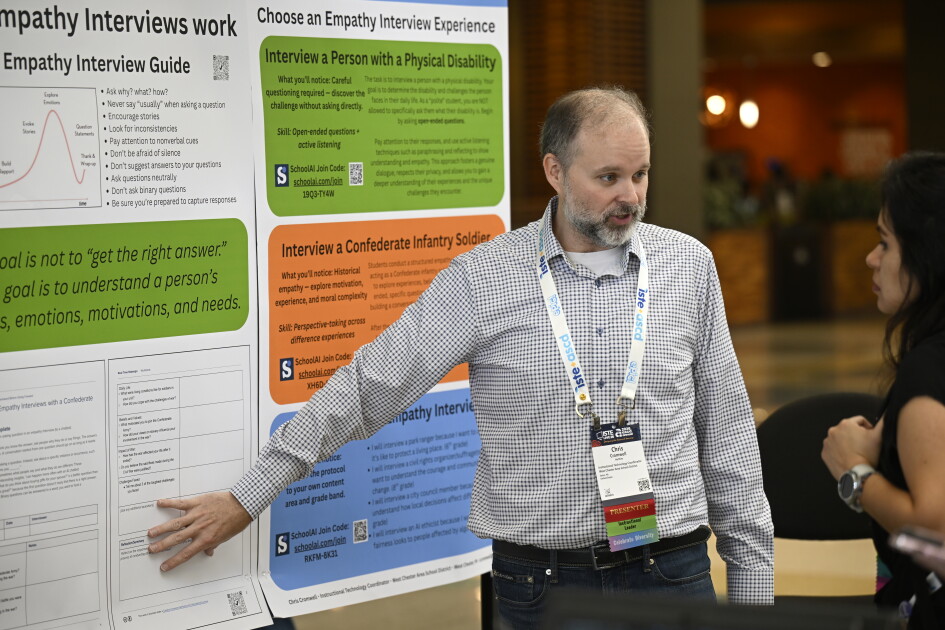 Can AI Help Students Learn Social-Emotional Skills?A small but growing number of educators are testing AI chatbots for social emotional learning, sparking debate over authentic student growth.
- Education Week reports that a small but growing number of educators are experimenting with AI chatbots to teach social emotional skills.
- Instructional technology coordinator Chris Cromwell presented on the approach at the ISTELive 26 and ASCD Annual Conference in Orlando on July 1.
- Proponents say generative AI can let students practice empathy, perspective taking, and self awareness in a low pressure setting.
- The report comes alongside broader EdWeek Research Center survey data showing educators remain divided on AI's overall impact on teaching and learning.
- The piece adds to ongoing debate over whether AI tools support or undermine authentic social emotional development in students.
 Podcast: Can an Algorithm Replace a Teacher's Instinct?EdSurge's podcast explores where AI meaningfully supports teachers and where professional instinct remains irreplaceable, featuring a teacher who built his own AI library app.
- EdSurge's podcast examines what happens when classroom problems are handed off to AI tools instead of teacher judgment.
- The episode features David Webb, a teacher based in Jakarta who spent a year building an AI powered library app called LibraryAid.
- The discussion explores where AI tools can meaningfully support teachers and where professional instinct remains irreplaceable.
- It reflects wider adoption trends, with surveys showing a majority of K 12 teachers now use AI tools at least weekly.
- The episode adds a practitioner's perspective to ongoing questions about how much decision making educators should delegate to AI.
✨ Extra Pearls
For Parents
- Name your child's feelings: help children label emotions, for example you seem frustrated, this builds emotional vocabulary and reduces anxiety over time.
- Model healthy worry: let children see you manage stress constructively, narrate your own coping, I'm nervous, so I'll take a deep breath, to normalise imperfection.
- Replace don't worry with curiosity: instead of dismissing fears, ask what's the worst that could happen and what would we do, to help children problem solve rather than avoid.
- Advocate loudly at medical appointments: write down concerns before visits, repeat them if unaddressed, and ask what are all my options, maternal voices matter and deserve to be heard.
- Screen for postpartum anxiety, not just depression: if you or someone you know recently gave birth and feels on edge, ask a provider specifically about anxiety, it is more common than most realise and highly treatable.
For Teachers
- Use AI as a rehearsal space, not a replacement: AI role play scenarios can help shy students practise difficult conversations before real world interactions, pair it with a genuine human debrief.
- Document your instincts: keep brief notes on gut feeling decisions about students, over time this builds a reflective record that reveals patterns AI cannot yet detect.
- Set AI free zones: designate specific discussions, journaling tasks, or peer interactions as completely tech free to preserve authentic social emotional growth opportunities.
- Co create AI guidelines with students: involving learners in deciding when and how to use AI tools builds critical thinking, ownership, and ethical digital habits simultaneously.
- Stay the relationship anchor: research consistently shows teacher student relationships are the single strongest predictor of engagement, no algorithm replicates the warmth of a trusted adult noticing a struggling child.
Remember: technology enhances what humans build, it never replaces it.
Thank You for Reading!
🧠 Stay Curious
Keep reading news from around the world to learn amazing new things every day!
🤔 Ask Questions
Wondering about something you read? Ask a grown up to help you find more information!
📚 Share Knowledge
Tell your friends and family about the cool facts you learned today!
Check back next week for more exciting news stories from around the world!
💌 We Value Your Feedback!
How can we improve our insights? We're constantly working to enhance our coverage. Your input helps us deliver more relevant and valuable information.
💡 Suggest Topics
What sectors or regions would you like to see covered in more depth?
🎨 Format Preferences
Would you prefer more visualizations, case studies, or expert interviews?
🗓️ Update Frequency
How often would you like to receive these insights?